


What Is Business Casual for Men? A Complete Guide
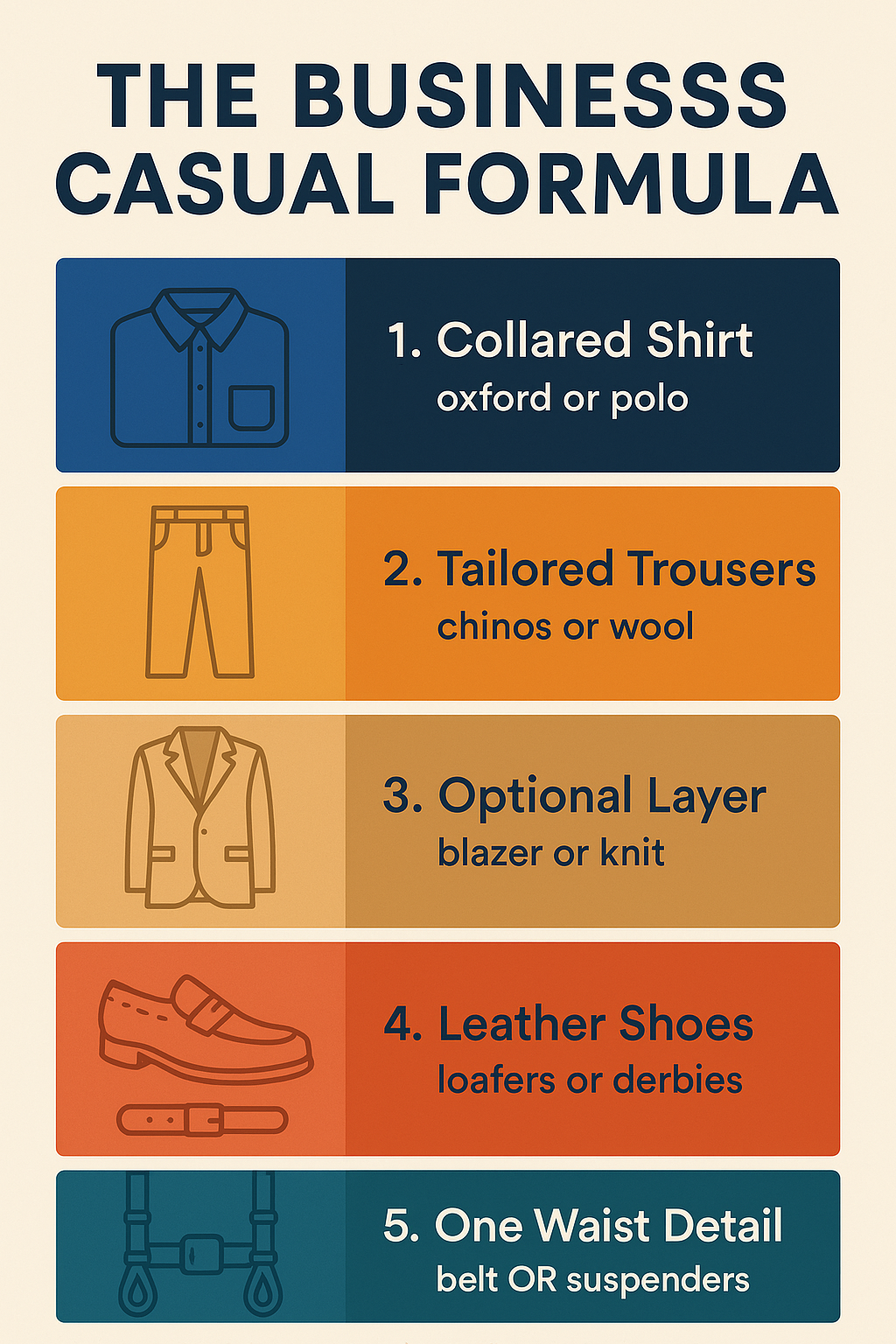
TL;DR: Business casual for men means a collared shirt and tailored trousers with leather shoes. No suit and no tie required, but nothing you would wear to mow the lawn either. The dependable formula is a button-up or polo, chinos or wool trousers, clean leather footwear, and a blazer or fine-knit sweater when you want extra polish.
What this guide covers
- What is business casual for men, exactly?
- The business casual wardrobe, piece by piece
- Business casual vs. business professional vs. casual
- What not to wear: the do’s and don’ts
- Are jeans, polos and sneakers business casual?
- Business casual shoes, ranked by formality
- Summer and winter variations
- What to wear to a business casual interview
- Five business casual outfits that always work
What is business casual for men, exactly?
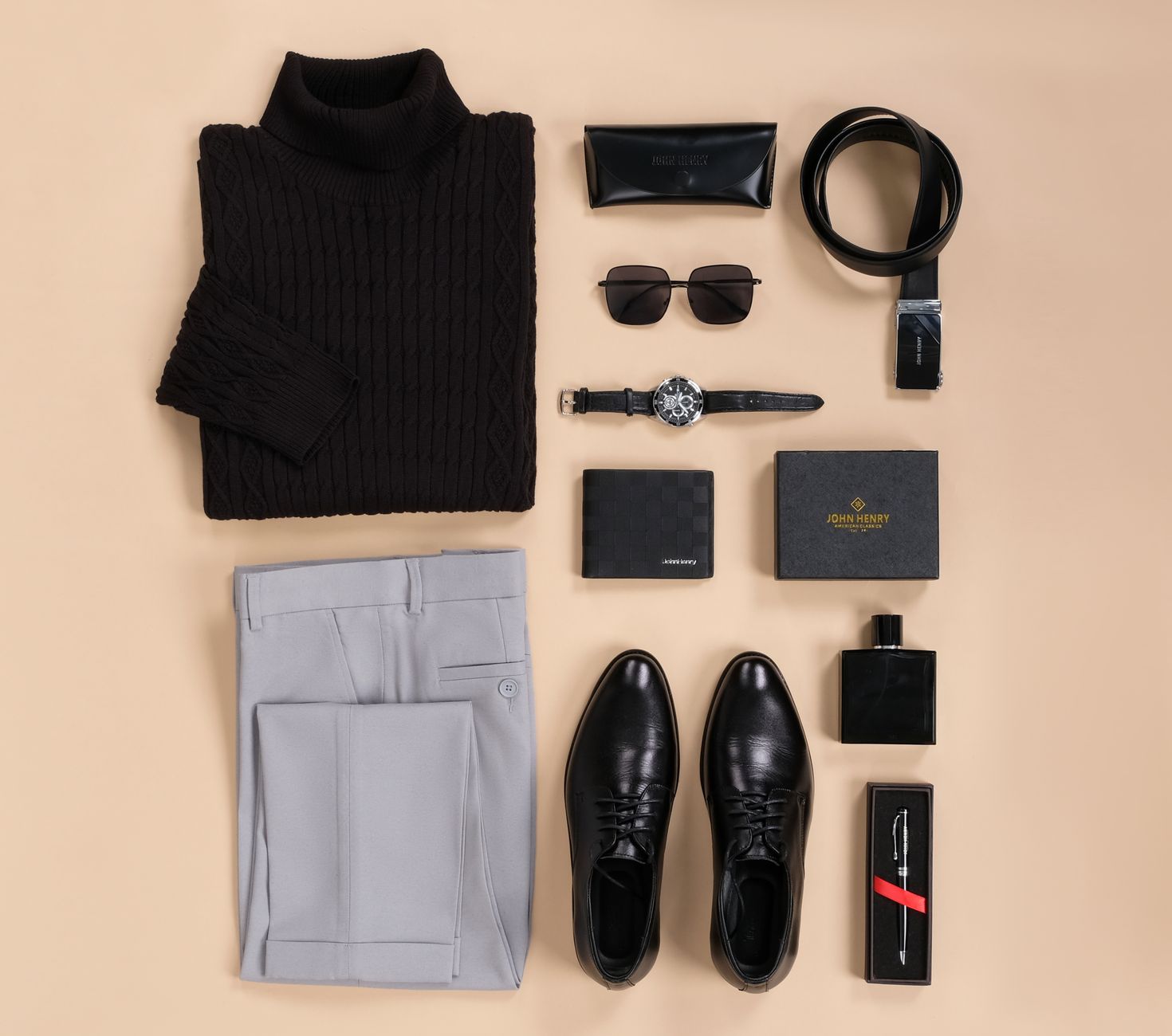
Business casual is the middle ground between a suit and street clothes: tailored, collared and made from office-appropriate fabrics, without the formality of a matching suit and tie. The University of Southern California Career Center lists the typical business casual kit as a polo or collared shirt, a sweater or cardigan, dress pants or chinos, and loafers or dress shoes.
The tricky part is that no two offices define it identically. A Monster poll of US workers published in 2025 found that 43% of employees say their workplace has no dress code at all, and among the 57% that do have one, 63% describe it as business casual. In other words, it is the default office standard, and it is enforced loosely.
Gallup data reported by The Hill puts the same shift in numbers: roughly 72% of American employees wear business casual or street clothes to work, and only 3% wear a suit daily. So the skill worth learning is not how to dress formally. It is how to look deliberate without a suit doing the work for you.
Three tests tell you whether an outfit clears the bar:
- Collar test. Does the top have a collar? Button-up shirts, polos and collared knits pass. Crewneck tees do not.
- Fabric test. Woven cotton, wool, linen blends and fine knits read professional. Fleece, jersey and distressed denim do not.
- Shoe test. Could you shine them or wipe them clean? Leather and suede pass. Running shoes do not.
The business casual wardrobe, piece by piece
A working business casual wardrobe needs about twelve pieces. Buy them in navy, grey, white, light blue, olive and tan and almost everything combines with everything else.
Shirts
Start with oxford cloth button-downs and poplin dress shirts in white and light blue, then add a subtle stripe or check. Long sleeves outrank short sleeves in every office. Polos in pique cotton or merino work from spring through early autumn, provided they fit close through the chest and hit mid-fly in length.
Trousers
Chinos and wool or wool-blend dress trousers are the backbone. Flat front, mid-rise, and a clean break at the shoe. Charcoal, navy and stone cover nine outfits out of ten. Trousers that sit properly at the waist are what separates business casual from weekend wear, which is exactly why so many men end up wearing suspenders instead of cinching a belt over ill-fitting waistbands.
Layers
An unstructured navy blazer is the single most useful business casual item you can own. After that: a merino crewneck or V-neck, a shawl-collar or button cardigan, and a lightweight quarter-zip for casual-leaning offices. A blazer instantly moves an outfit one rung up in formality, which is handy when a surprise client meeting lands on your calendar.
Outerwear
Keep it tailored. A navy or tan trench, a wool topcoat, a quilted vest or a clean leather jacket all sit comfortably over business casual. Technical ski shells and hoodies undercut everything underneath them.
Accessories
A leather belt matched to your shoes, a simple watch, and dark dress socks are the baseline. Suspenders are a legitimate business casual alternative to a belt, especially with pleated or higher-rise trousers, and they hold a shirt line cleaner through a long day. Two rules matter: never wear both at once, which we explain in detail here, and set the length properly so the straps sit flat rather than bowing off the chest. If you are buying a first pair, this breakdown of what makes a pair worth owning covers hardware, width and attachment types.
Business casual vs. business professional vs. casual
Business casual sits one step below business professional and one step above casual. The table shows what changes at each level.
| Element | Business professional | Business casual | Casual |
|---|---|---|---|
| Top | Dress shirt, always long sleeve | Button-up, polo or collared knit | T-shirt, henley, sweatshirt |
| Bottom | Matching suit trousers | Chinos or dress trousers | Jeans, shorts, joggers |
| Jacket | Matching suit jacket, required | Blazer or sweater, optional | None or casual outerwear |
| Tie | Expected | Optional, often skipped | Never |
| Shoes | Oxfords, polished | Loafers, derbies, chukkas, clean minimal sneakers | Sneakers, boots, sandals |
| Typical setting | Law, banking, client pitches, funerals | Most offices, interviews, conferences | Remote work, weekends |
Smart casual is the fourth term people mix in. It overlaps heavily with business casual but allows more personality: a knit polo with dark denim, a bolder jacket, a patterned sock. If your office says smart casual, you can relax the trouser rule a little and tighten the styling instead.
What not to wear: the do’s and don’ts
Most business casual mistakes are fit and condition problems, not category problems. Scuffed shoes and a baggy shirt will read worse than a well-cut polo. Use this as a pre-flight check.
| Item | Do | Don’t |
|---|---|---|
| Shirts | Pressed button-ups, tucked, sleeves at the wrist bone | Graphic tees, sheer fabrics, untucked dress shirts hanging past the fly |
| Trousers | Tailored chinos or wool trousers with a clean hem | Cargo pants, sweatpants, shorts, anything pooling at the ankle |
| Denim | Dark, rigid, no fading, only if your office allows it | Ripped, bleached, light-wash or skinny denim |
| Shoes | Polished leather or clean suede, dark socks | Running shoes, flip-flops, square-toe dress shoes, white athletic socks |
| Layers | Unstructured blazer, merino knit, cardigan | Hoodies, team jackets, fleece pullovers |
| Accessories | One leather belt or one pair of suspenders, matched metals | Belt and suspenders together, novelty ties, loud logos |
| Grooming | Trimmed, ironed, lint-rolled | Wrinkles, pet hair, strong fragrance |
If you do wear braces to the office, keep them classic in width and colour and keep the straps up. Letting them hang is a workshop look, not an office one, and the same goes for the other habits covered in this rundown of suspender etiquette.
Are jeans, polos and sneakers business casual?
These three questions account for most business casual confusion, so here is a straight answer on each.
Are jeans OK for business casual?
Sometimes. Dark, rigid, unwashed denim with no rips, worn with a tucked button-up, a blazer and leather shoes, passes in creative, tech and many mid-sized offices. It does not pass in finance, law, government or at an interview. When in doubt, wear chinos for your first two weeks and copy what your manager wears after that. Denim gets more office-friendly when you dress the rest of the outfit up, which is the same principle behind wearing suspenders with tailoring.
Is a polo business casual?
Yes, in most offices, as long as it is a proper collared polo in pique cotton, merino or a textured knit, and not a performance golf shirt with a sponsor logo. Long-sleeve knit polos are the dressiest version and look sharp under a blazer. Keep it tucked with dress trousers, and untucked only if the hem sits at the mid-fly.
Are sneakers OK for business casual?
Only minimal leather sneakers in white, black, navy or grey, with a slim sole, no visible branding and no scuffs. Those read as business casual in relaxed offices. Runners, chunky trainers, canvas skate shoes and anything with a mesh upper do not. If your office has clients walking through it, keep a pair of loafers under your desk.
Business casual shoes, ranked by formality
Shoes set the ceiling of any business casual outfit. Below is the hierarchy from dressiest to most relaxed, with what each pairs best with.
| Shoe | Formality | Best with | Office verdict |
|---|---|---|---|
| Cap-toe oxford | Highest | Wool trousers, blazer | Safe everywhere, can look formal without a jacket |
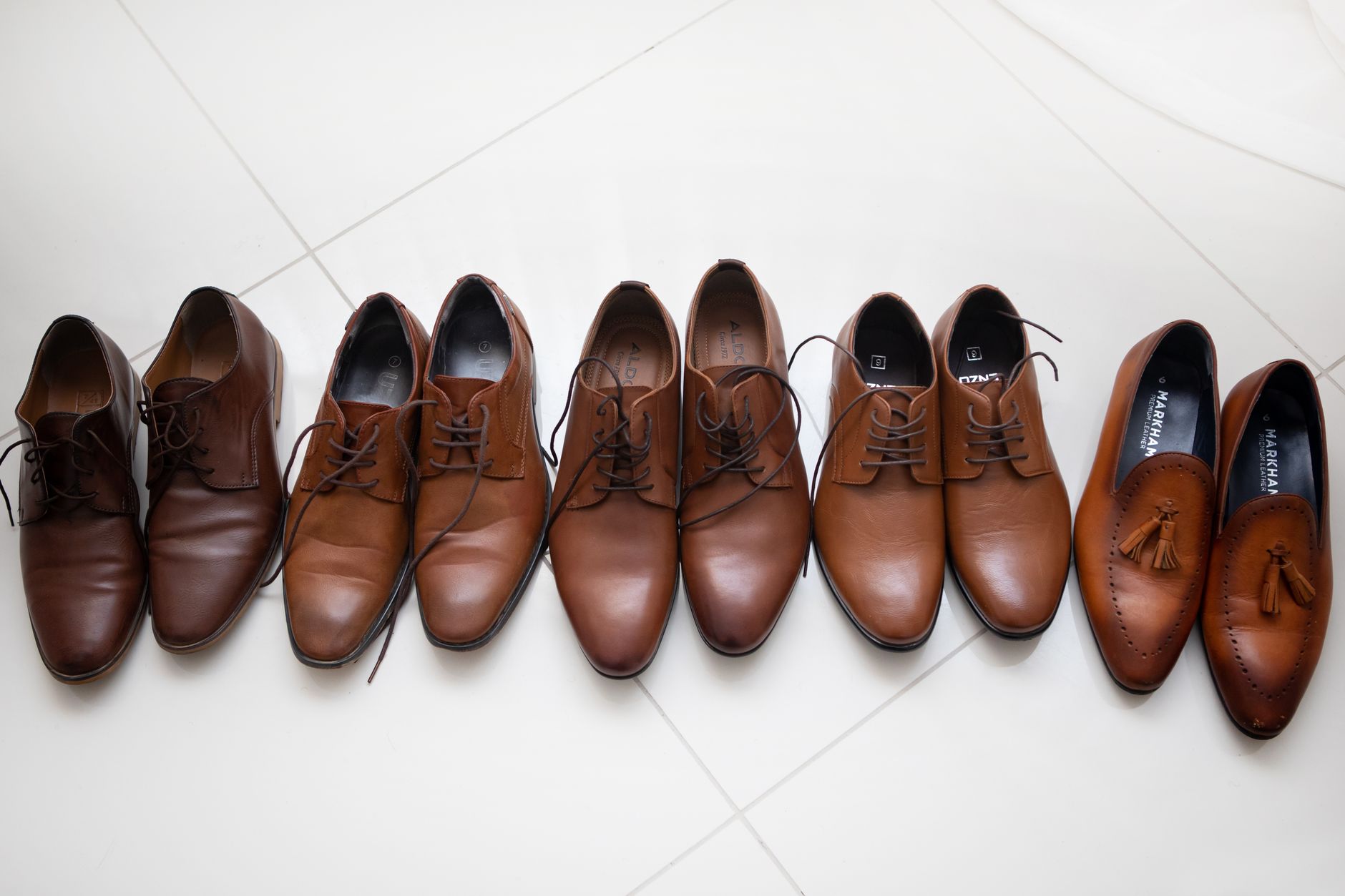
| Derby or blucher | High | Chinos, wool trousers | The most versatile single pair |
| Penny or bit loafer | Medium-high | Chinos, cropped trousers | Business casual workhorse, no-sock in summer |
| Chukka boot (suede) | Medium | Chinos, dark denim | Great autumn and winter option |
| Chelsea boot | Medium | Wool trousers, dark denim | Works if the sole stays slim |
| Minimal leather sneaker | Lowest that still passes | Chinos, knit polo | Relaxed offices only, must be spotless |
Two pairs cover a year: brown derbies or loafers for most days, black or dark brown for anything more formal. Match your belt or suspender leather to whichever you are wearing.
Summer and winter variations
The formula stays the same across seasons; only the fabric weight changes.
Summer: switch to linen-cotton blends, seersucker, lightweight chinos and unlined blazers in stone, light grey and pale blue. Short-sleeve camp collar shirts are acceptable in genuinely casual offices, but a rolled long sleeve is safer and barely warmer. Loafers with no-show socks beat sandals every time. Suspenders actually run cooler than a belt in July because nothing constricts your waist, which is one reason warm-weather dressers keep coming back to them.
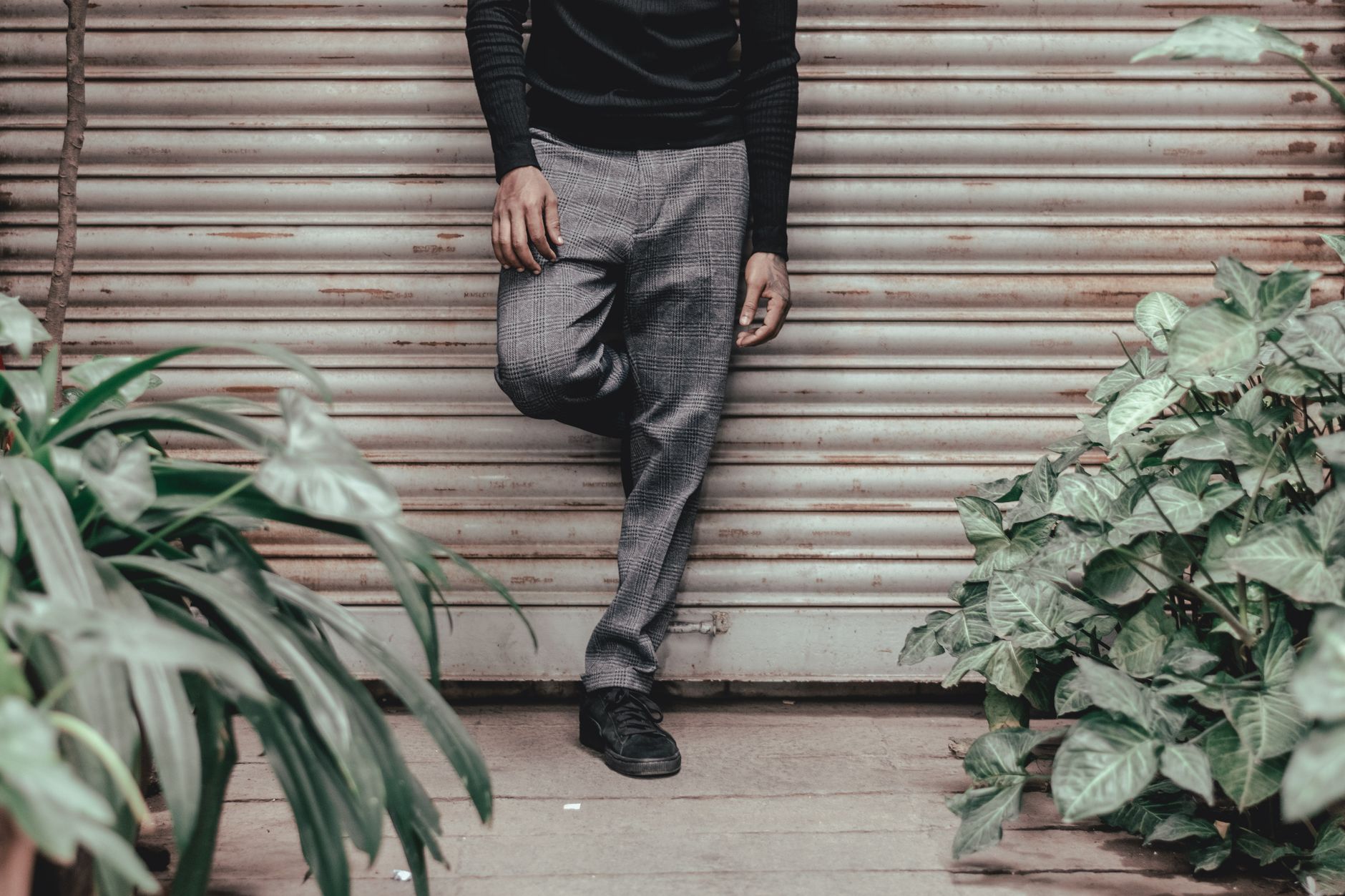
Winter: layer with flannel trousers, merino and lambswool knits, tweed or corduroy jackets, and add a wool topcoat. Darker palettes, heavier textures, and boots instead of loafers. A crewneck sweater over a collared shirt with the collar out is the single easiest cold-weather business casual look.
What to wear to a business casual interview
Dress one level above the office you are interviewing at. For a business casual workplace that means a navy or grey blazer, a pressed light blue or white shirt, dark wool trousers and polished leather shoes. A tie is optional, but bringing one in your bag costs nothing.
Candidates consistently overweight formality here, and that is fine. A Randstad US survey found that 65% of workers believe it is important to wear a suit to an interview regardless of how formal the company actually is, and 42% said they would rather be twenty minutes late than turn up underdressed. Nobody has ever lost a job for being slightly too sharp.
Practical checks the night before: press the shirt, clean the shoes, empty your pockets, and make sure the trousers sit at the waist without you tugging at them. If a belt breaks the line of the outfit, suspenders under the jacket keep everything flat and still. There is more on that in this guide to getting the details right.

Five business casual outfits that always work
Each of these uses pieces already listed above. Build them once and you can dress for a week without thinking.
1. The default: navy blazer, white oxford, grey trousers
Unstructured navy blazer, white oxford button-down tucked in, mid-grey wool trousers, brown penny loafers. This is the outfit that works for a board meeting, a client lunch and a normal Tuesday. Add a tie and it reads business professional.
2. The everyday: light blue shirt and khaki chinos
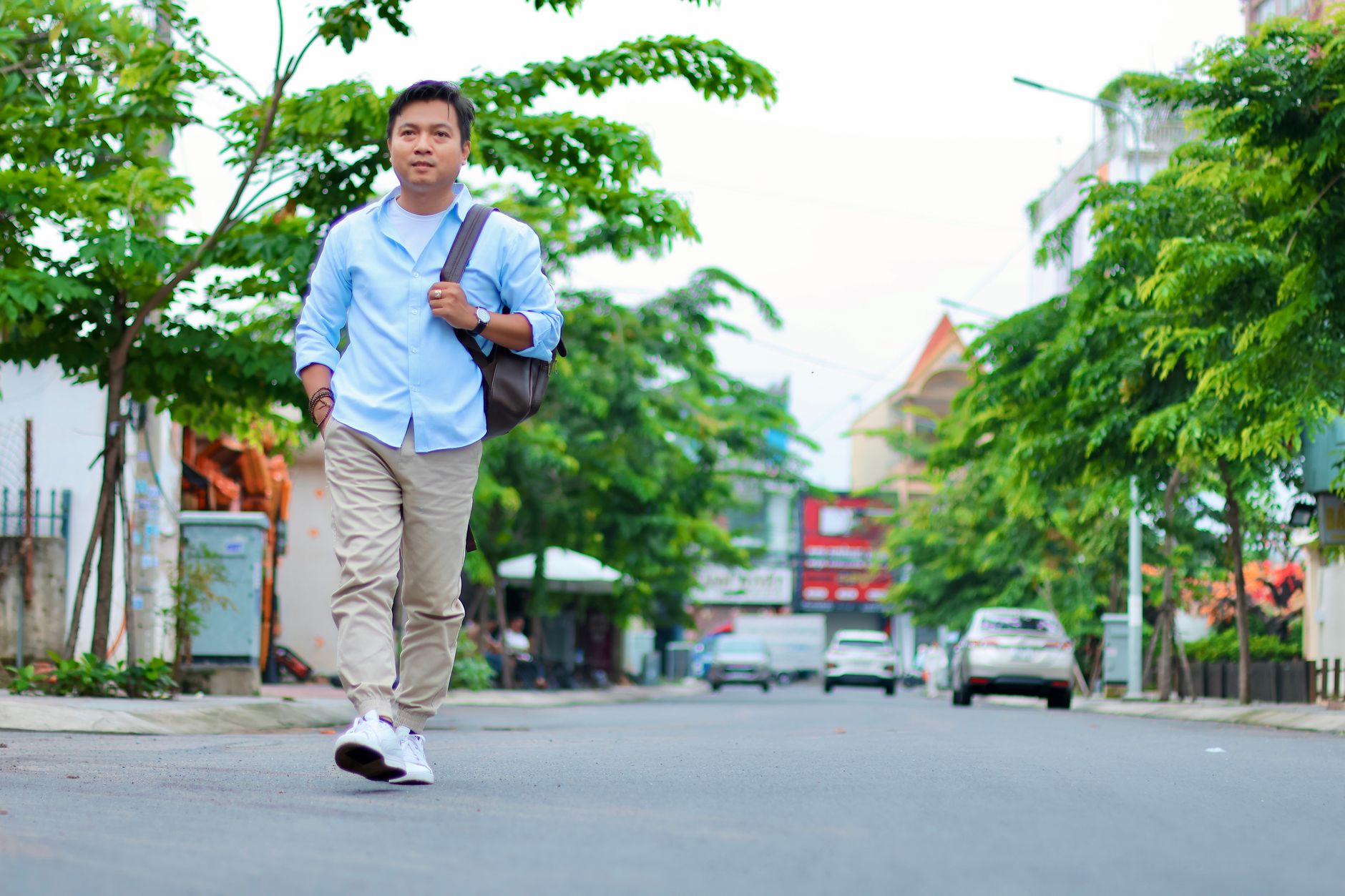
Light blue poplin shirt, khaki chinos, brown leather belt, brown derbies, navy socks. The lowest-effort outfit that still looks considered. Roll the sleeves twice if the office is warm.
3. The cold-weather one: sweater over a collared shirt

Charcoal merino crewneck over a fine-stripe shirt with the collar out, charcoal trousers, suede chukka boots. Warm, quiet, and it hides a shirt you have worn since 7am.
4. The relaxed Friday: knit polo and olive chinos
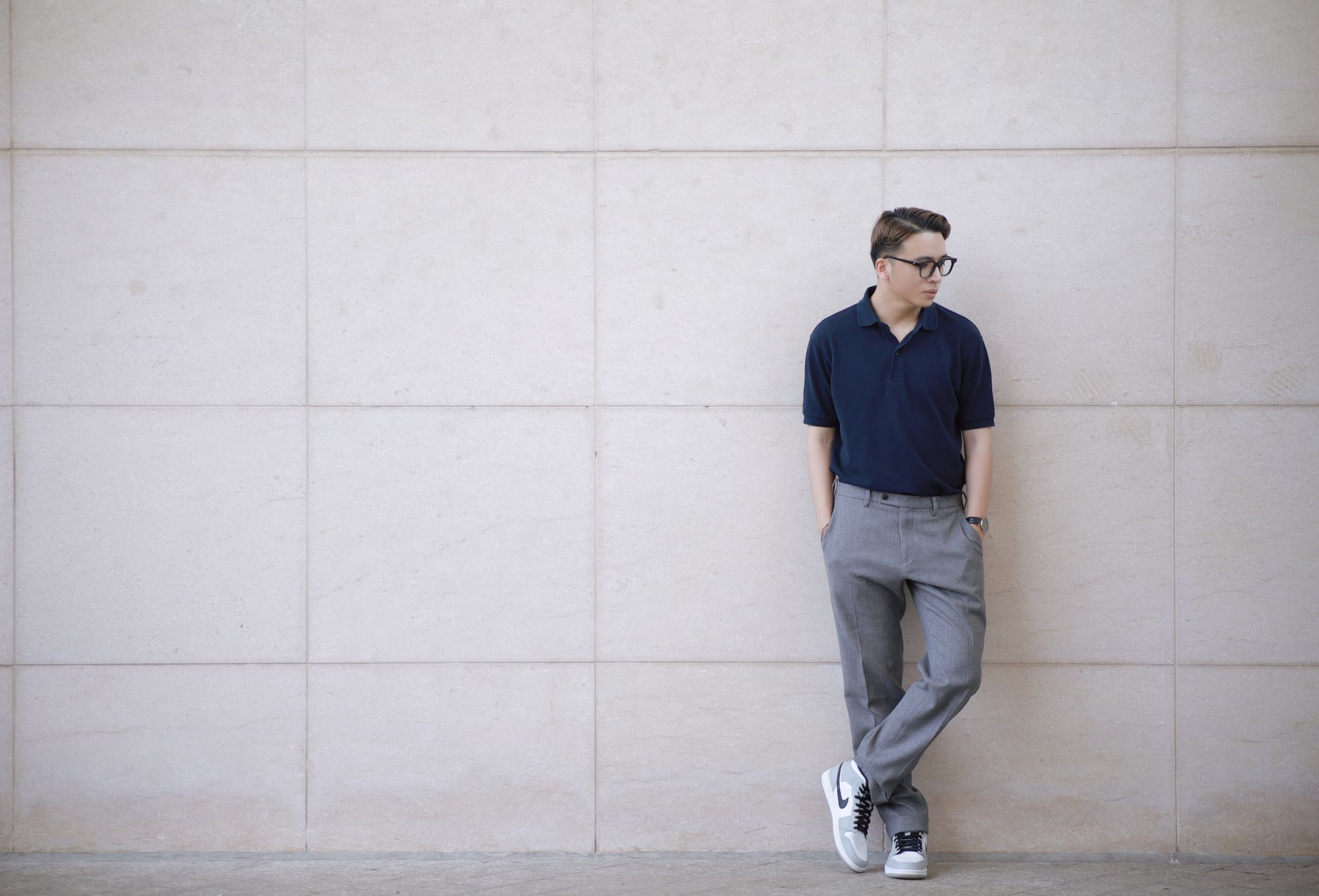
Navy merino polo, olive chinos, white minimal leather sneakers, no belt needed if the trousers fit. Keep the sneakers immaculate or the whole outfit slides into casual.
5. The one with suspenders: shirt, trousers, braces, no jacket
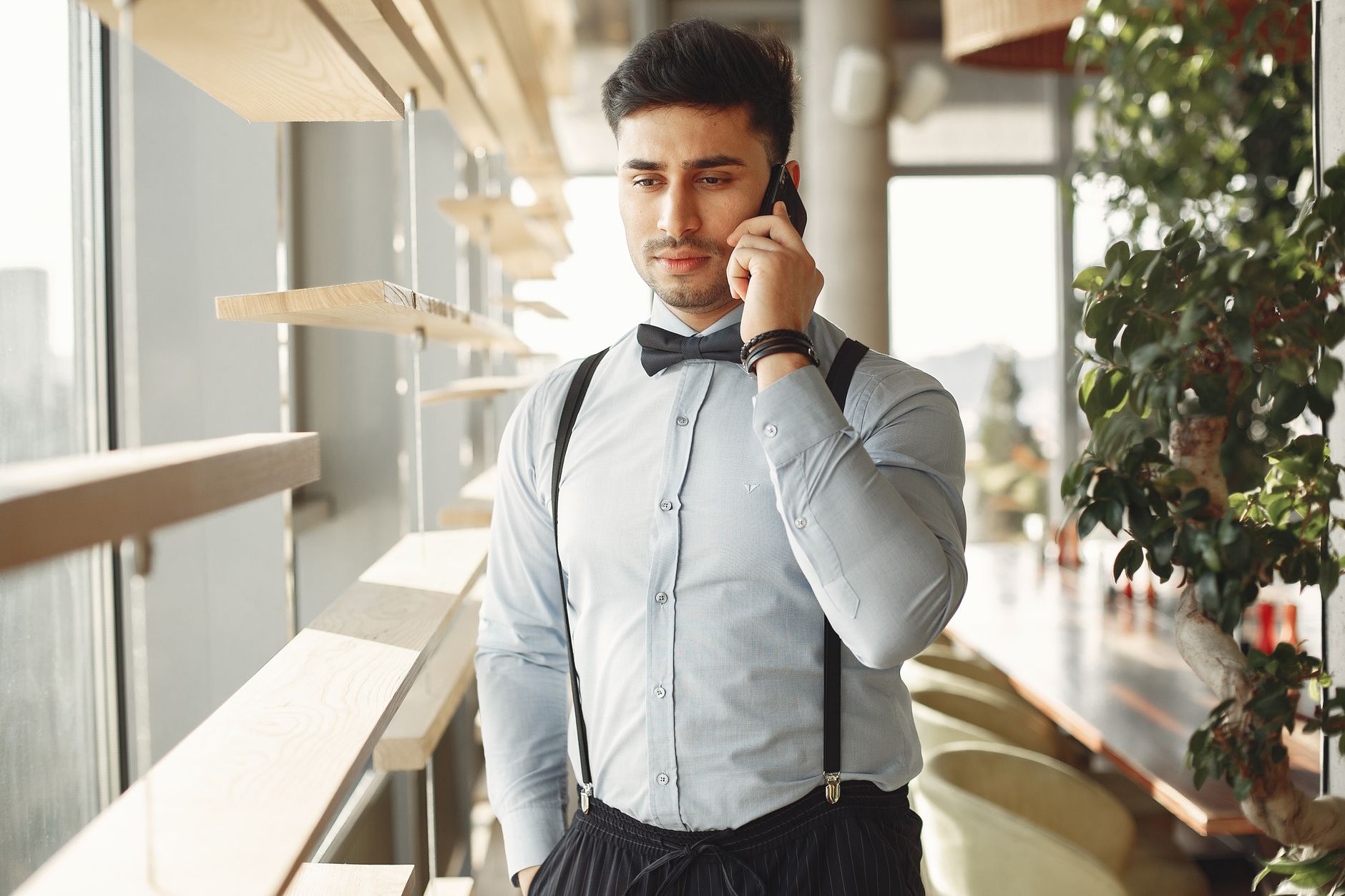
Crisp white or blue shirt tucked in, grey pleated trousers, navy or burgundy suspenders in a classic width, brown leather shoes matched to the suspender leather. It is the jacket-off look that still reads finished, and it is why braces have quietly returned to creative and hospitality offices.
Want to build that last look? Browse the full range of suspender styles and pick a classic leather-trim pair in navy, burgundy or charcoal. Those three colours cover every business casual outfit on this page.
Key takeaways
- Business casual for men is a collared shirt, tailored trousers and leather shoes, with a jacket or knit as optional polish.
- It is the most common office dress code in the US, and 63% of workers with a dress code say theirs is business casual, per Monster’s 2025 poll.
- Fit and condition matter more than category. A well-cut polo beats a wrinkled dress shirt.
- Jeans, polos and sneakers can all work, but only in their dressiest, cleanest versions and only where the office allows it.
- For interviews, dress one level above the office and skip the grey areas entirely.
- Twelve pieces in navy, grey, white, blue, olive and tan will dress you for a full working year.
People also ask
Is business casual the same as smart casual?
No. Business casual is an office dress code built on tailored trousers and collared shirts. Smart casual is a social dress code that allows dark denim, bolder colour and more personality. Every smart casual outfit is not automatically office-safe.
Do you need to wear a tie with business casual?
No. A tie is optional and usually skipped. If you wear one, keep it in a matte texture such as knit or wool and pair it with a jacket, otherwise it looks stranded. Suspenders and a tie together is a classic combination, though it leans dressier than most business casual days require.
Can you wear a t-shirt for business casual?
Not on its own. A plain, heavyweight crew tee under a blazer can pass in creative offices, but a t-shirt with no layer over it fails the collar test that most dress codes are built on.
Are suspenders business casual?
Yes. Classic suspenders in navy, burgundy, grey or black, roughly 1.25 to 1.5 inches wide, are business casual when worn with dress trousers and a tucked shirt. Avoid novelty prints and clip-ons with visible metal in conservative offices, and never pair them with a belt.
What colours work best for business casual?
Navy, charcoal, mid-grey, white, light blue, olive and tan. Keep patterns subtle: fine stripes, small checks and solid knits. Bright colour belongs in one accessory, not three garments.
Can you wear short-sleeve shirts for business casual?
In hot climates and relaxed offices, yes, provided the shirt has a collar and a clean drape. A rolled long sleeve is the safer choice for meetings, interviews and anywhere clients will see you.


