


Is a Polo Business Casual? A Practical Dress Guide
TL;DR: Yes, a polo is business casual in most offices today. A solid-color polo in cotton pique or merino, cut close through the body, paired with chinos or dress trousers, reads as business casual almost everywhere outside law, finance, and formal client meetings. The details decide it: neutral color, clean fit, minimal logo, and a hem short enough to look deliberate whether you tuck it or not.
Written by the Trend Suspenders style team, who spend their working lives figuring out how tucked shirts, waistbands, and braces behave in real offices.
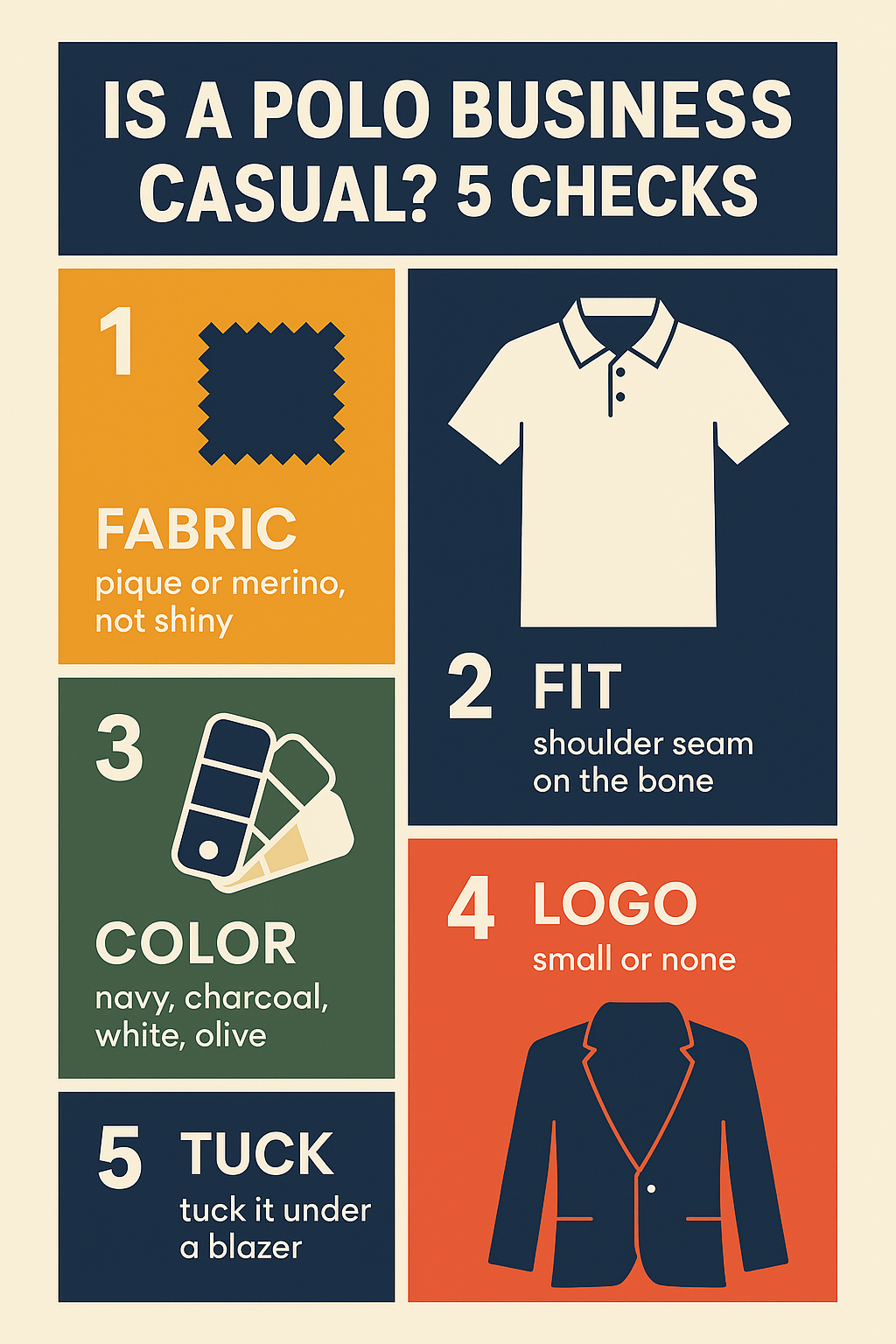
Table of contents
- The short answer, with the exceptions
- What business casual actually means now
- What makes a polo read business casual: fabric, fit, color
- Tucked or untucked for business casual?
- Polo with khakis, chinos, and jeans
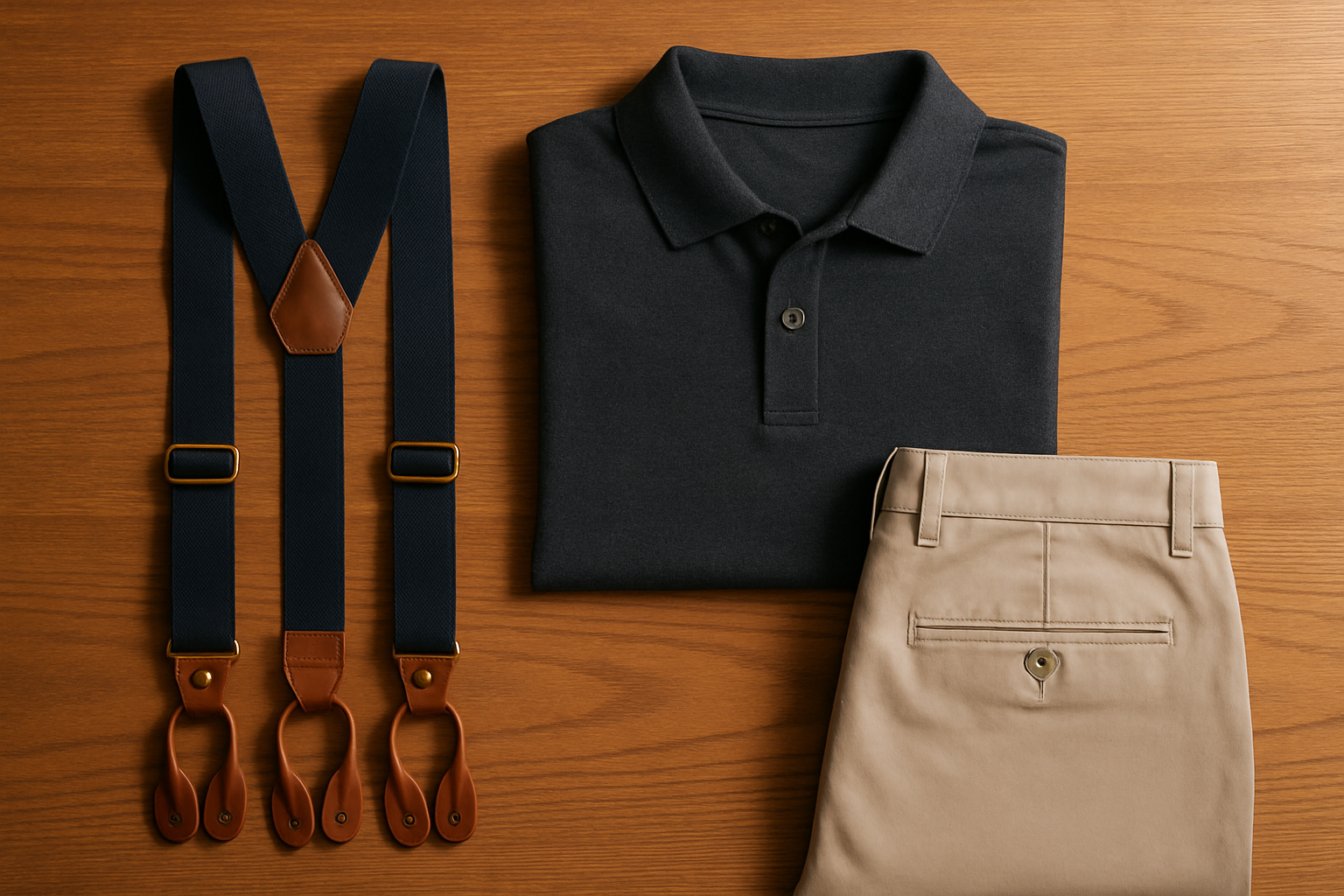
- Where suspenders fit with a business casual polo
- When a polo is not business casual
- Men’s and women’s business casual polo styling
- Key takeaways
- People also ask
So is a polo business casual, or not?
Yes, with conditions. A polo sits between a t-shirt and a dress shirt, so it lands inside business casual whenever the office treats a collar plus tailored trousers as the standard. It falls out of business casual when the fabric is sporty, the fit is baggy, the logo is loud, or the room expects a jacket.
Think of it as a sliding scale rather than a yes or no. The same shirt can look sharp on a Tuesday in a marketing office and underdressed in a partner meeting at a law firm three hours later. Nothing about the shirt changed, only the room.
| Setting | Is a polo business casual here? | Safer alternative |
|---|---|---|
| Tech, creative, startup offices | Yes, everyday acceptable | None needed |
| Corporate office, no client contact | Yes, if tucked and neutral | Oxford button-down |
| Client meeting or pitch | Only with a blazer over it | Dress shirt and blazer |
| Law, banking, private wealth | Usually no | Dress shirt, tie optional |
| First-round job interview | Risky, skip it | Dress shirt and trousers |
| Conference, trade show, golf day | Yes, often the uniform | None needed |

What business casual actually means now
Business casual means professional clothing without a suit: a collared top, tailored trousers or a skirt, and leather shoes. It is now the single most common way Americans dress for work. Gallup found that 41% of U.S. workers wear business casual on a typical day, 31% wear casual street clothes, and only 3% wear business professional attire.
The drift is recent and fast. HR Dive reported that half of workplaces had adopted casual dress codes, up from 32% five years earlier, citing Indeed’s survey data. That shift is exactly why the polo moved from weekend wear to weekday default.
The catch is that no two companies define the term identically. Read your handbook, then read the room. If your manager wears an untucked polo on Wednesdays, your question is already answered.
What makes a polo read business casual: fabric, fit, color
Three variables decide whether a polo looks professional or looks like you came from the driving range. Get all three right and nobody questions the shirt.
Fabric
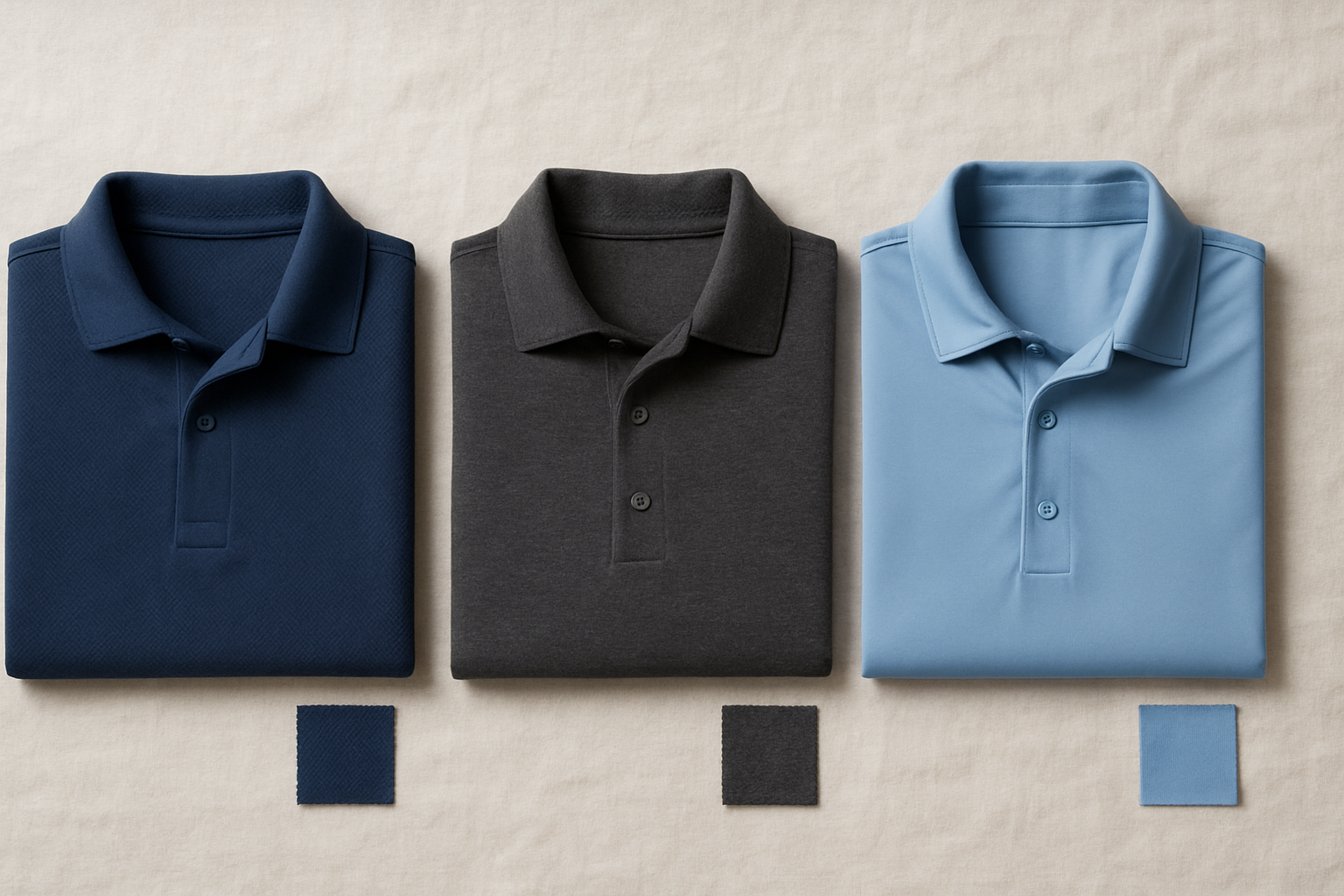
Cotton pique, fine-gauge merino, and supima jersey read professional because they hold structure and have a matte surface. Shiny polyester performance knits and moisture-wicking athletic fabrics read sporty, because that is what they were built for. The original was pique cotton: Rene Lacoste debuted his short-sleeved pique tennis shirt at the 1926 U.S. Open, as Heddels documents in its history of the polo shirt, and pique remains the most office-appropriate weave.
Fit
The shoulder seam should land on your shoulder bone, the sleeve should end mid-bicep and sit close without gripping, and the body should skim rather than drape. Excess fabric at the waist is the single fastest way to make a polo look casual.
Color
Navy, charcoal, slate, white, olive, and burgundy are the safe professional range. Bright pastels, neon, and heavy color blocking pull toward leisurewear. A small tonal logo is fine; a large embroidered crest or a competitor’s branding is not.
| Detail | Raises formality | Lowers formality |
|---|---|---|
| Fabric | Pique cotton, merino wool | Shiny polyester, mesh |
| Collar | Structured or knit collar that stands | Soft collar that curls or flops |
| Sleeve | Trim, mid-bicep | Wide, elbow-length |
| Color | Navy, charcoal, white, olive | Neon, tie-dye, color blocks |
| Logo | Small or none | Large crest, sports branding |
| Hem | Straight, mid-fly length | Long tails past the seat |
Tucked or untucked for business casual?
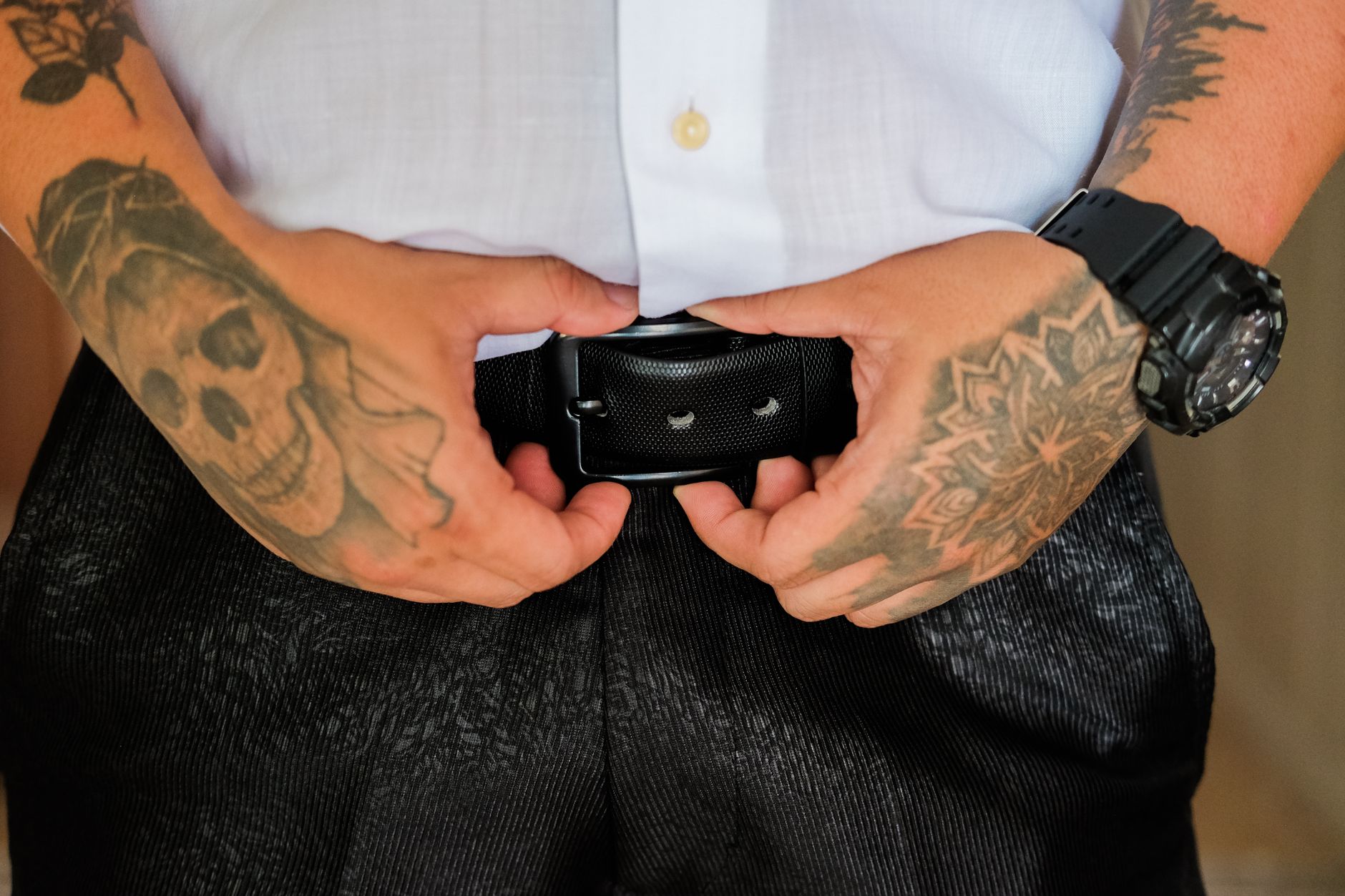
Tuck it in when the office leans traditional, when you are wearing a belt or braces, and any time you put a blazer over the top. Untucked is acceptable in relaxed offices only when the hem is short enough to look intentional.
The length test is simple: an untucked polo should end around the middle of your fly and cover your belt line by an inch or two, no more. If it reaches the bottom of your back pockets, it was cut to be tucked, so tuck it.
- Always tuck: under a blazer, with pleated trousers, with suspenders, in any client-facing meeting.
- Tuck is optional: short-hem polos with chinos in a casual office.
- Never do: the front tuck or half tuck at work. It reads sloppy rather than relaxed.
- Watch the placket: keep the top button open, the second one closed. Two open buttons starts to look like a night out.
Polo with khakis, chinos, and jeans
A polo with khakis or chinos is the safest business casual combination there is, and it works in almost every office that allows a collar without a tie. A polo with jeans is business casual only when the jeans are dark, undamaged, and cut straight or slim.
Polo and khakis
Stone, tan, or grey chinos with a tucked navy polo and leather loafers is a complete business casual outfit that needs no explanation. Add a leather belt that matches your shoes, or swap the belt for braces if you want the waistband to sit cleaner.
Polo and jeans
Dark indigo or black denim with no fading, no rips, and a clean hem can carry a polo in a relaxed office. Light wash, distressed, or wide-leg denim pushes the outfit into weekend territory. If you like the denim route and want more structure, our breakdown of suspenders with jeans covers which strap widths and leathers suit a denim waistband.
Polo and dress trousers
Wool or wool-blend trousers with a merino polo is the most formal version of this outfit. It is the combination to reach for when a room is slightly above your usual dress code but a tie would be too much.

Where suspenders fit with a business casual polo
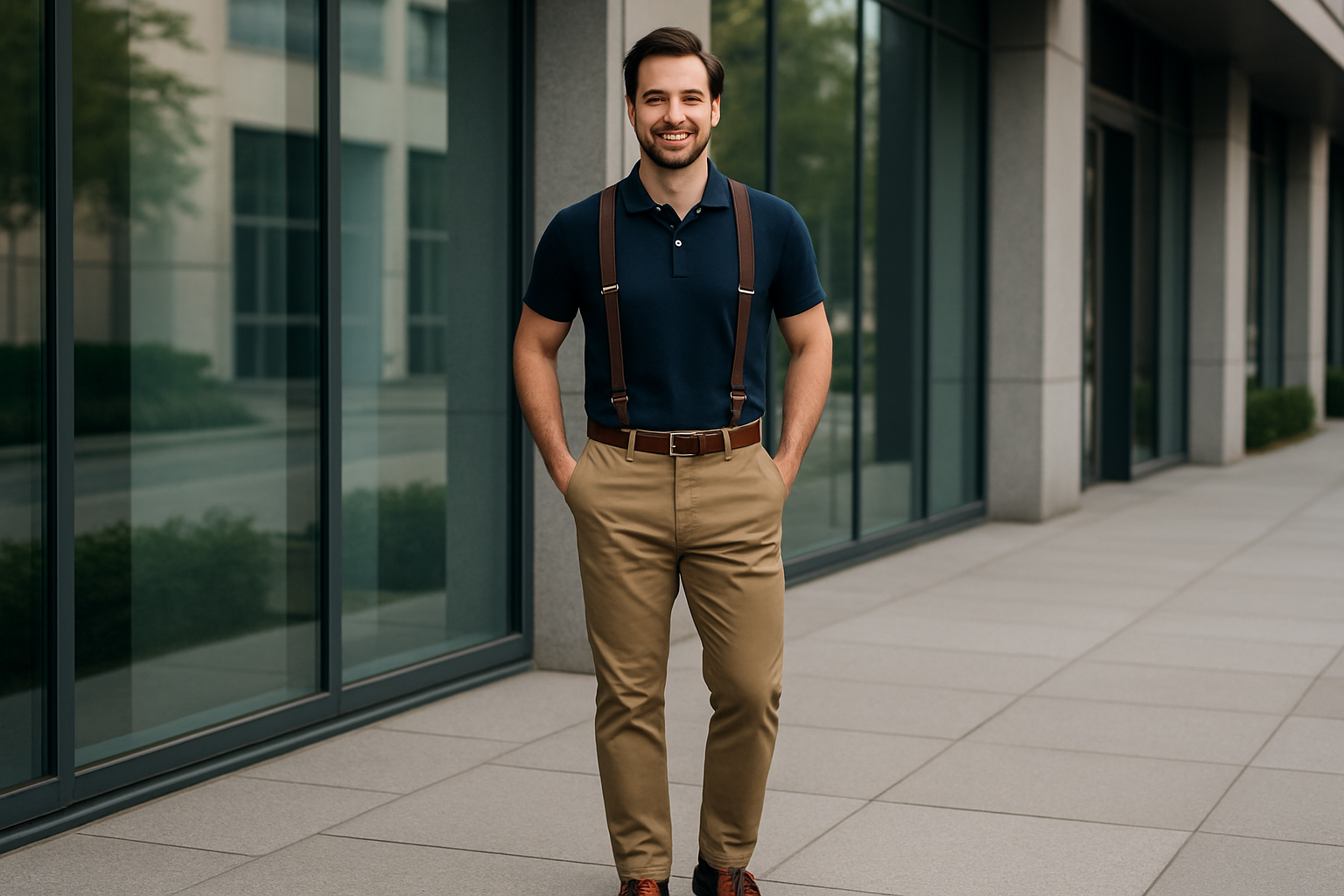
Suspenders work with a business casual polo only when the polo is tucked, the fabric has some structure, and the trousers are cut for braces. Done right, they solve the problem a belt creates: the waistband stays level, the shirt stays put, and nothing bunches at the hip.
- Choose button-on braces over clips for office wear. Clips can drag on a knit polo and leave marks on fine fabric.
- Keep the color quiet. Navy, charcoal, burgundy, or brown leather-trimmed straps beside a neutral polo stay firmly inside business casual.
- Go X-back or Y-back rather than novelty prints when the setting is professional. If you want the differences explained properly, this guide to wearing suspenders correctly walks through back styles, strap width, and attachment.
- Never wear a belt at the same time. We explained the reasoning in this article, and the short version is that the two fight each other visually and functionally.
- Match the trousers to the braces. Side-adjuster or high-rise trousers hold the line best, as our notes on choosing trousers for braces explain.
Two more things worth knowing before you wear braces to work: strap width and hardware quality change how formal the look reads, which we break down in what to look for in a well-made pair, and there is a short list of workplace conventions covered in our suspender etiquette guide.
Ready to upgrade the waistband? Browse the full range of types of suspenders and pick a pair in navy, charcoal, or brown leather that will work with every polo already in your closet.
When a polo is not business casual
A polo stops being business casual in conservative industries, in first impressions, and anywhere a jacket is expected. These are the situations where the shirt costs you credibility even when it is the nicest one you own.
- Job interviews. Purdue Global’s career advice is to dress slightly more formally than the average employee, which in practice means a button-down or blouse rather than a polo for a first interview.
- Law, banking, insurance, and private wealth. Collared cotton with buttons at the cuff remains the baseline in these fields.
- Client pitches and new business meetings. If money is on the table, wear a shirt and a jacket.
- Board presentations and formal reviews. Add a blazer at minimum; some rooms still expect a full suit, which is a different conversation we covered in our look at suits and braces.
- Funerals, formal dinners, and black tie adjacent events. A polo is never the answer here.
The general rule: when the cost of being underdressed is higher than the cost of being overdressed, leave the polo at home.

Men’s and women’s business casual polo styling
The rules are nearly identical for men and women, and only the pairings differ. Both versions depend on fabric quality, a clean fit, and a neutral palette.
Men
Tucked pique polo, chinos or wool trousers, leather loafers or clean derbies, and either a belt or braces. A navy unstructured blazer over the top turns the same outfit into something you can wear to a client lunch. Keep the sleeve trim, keep the collar standing.
Women
A fitted knit polo works with tailored trousers, a midi or pencil skirt, or under a cardigan or blazer. Merino and cotton knit polos in solid colors look deliberate; cropped athletic polos do not. Loafers, block heels, or clean leather flats finish it.
Shared rules
- Press or steam the shirt. Wrinkles cost more formality points than the collar style ever will.
- Replace polos once the collar softens or the hem curls. Tired knitwear reads as careless.
- Keep accessories quiet: one watch, one leather color, nothing jangling.


Key takeaways
- Yes, a polo is business casual in most modern offices when it is a neutral, well-fitted pique or merino knit worn with tailored trousers.
- Business casual is now the dominant American dress code: Gallup puts it at 41% of workers, against 3% for business professional.
- Fabric, fit, and color do the heavy lifting. Shiny performance knits, baggy bodies, and big logos are what break the look.
- Tuck it for traditional offices, blazers, belts, and braces. Untucked is fine only when the hem ends around mid-fly.
- Chinos are the safest partner; dark, undamaged jeans work in relaxed offices; wool trousers dress the polo up.
- Skip the polo for interviews, conservative industries, and client pitches.
- Braces beat a belt with a tucked polo, as long as they are button-on, neutral, and matched to the right trousers.
People also ask
What is not acceptable for business casual?
Not acceptable: t-shirts with graphics, hoodies, athletic wear, gym shoes, flip flops, ripped or distressed denim, shorts, tank tops, and anything stained, wrinkled, or visibly worn out. Loud novelty prints and beachwear fabrics also fall outside the code in almost every office.
Are khakis and a polo business professional?
No. Khakis and a polo are business casual, not business professional. Business professional means a suit or a jacket and tailored trousers with a dress shirt, and usually a tie for men. Adding a blazer over the polo moves the outfit closer, but a collared dress shirt is what the professional standard actually calls for.
What type of attire is a polo?
A polo is classified as smart casual or business casual attire. It sits above a t-shirt and below a dress shirt on the formality scale, which is why it works for casual Fridays, conferences, golf days, and everyday office wear in relaxed dress codes.
Can you wear suspenders with a polo shirt?
Yes, if the polo is tucked in and the braces are button-on rather than clip-on. Clips can distort a knit collar band or hem, and an untucked polo hides the whole point of the straps. Keep the color neutral for work and save patterned pairs for social occasions, as our rundown of common mistakes explains.
Does a polo with a large logo still count as business casual?
Usually not. A small tonal chest logo is invisible at conversation distance and causes no problem. Large embroidered crests, sponsor branding, or sports team marks read as casual or promotional wear, which puts the shirt outside most business casual codes.
Can you wear a blazer over a polo to work?
Yes, and it is the fastest way to dress a polo up. Use an unstructured or soft-shouldered blazer in navy, grey, or olive, tuck the polo, and keep the shirt in a fine knit so it does not bunch under the jacket. This combination handles client meetings that a bare polo cannot.


