


13 Business Casual Outfit Ideas for Men
TL;DR: Business casual for men means a collared shirt or fine-gauge knit, tailored non-athletic trousers, a leather shoe, and no tie required. A blazer is optional. Dark denim passes in most offices in 2026, and athletic wear, shorts, flip-flops, and graphic tees never do. The 13 business casual men ideas below are built from pieces you probably already own, plus the accessories that make them look deliberate instead of accidental.
Business casual is now the single most common way American men dress for work. Gallup found that 41% of U.S. workers wear business casual most days, compared with just 3% who wear a suit or its equivalent (Gallup, August 2023 poll). That is the good news and the problem at the same time: the dress code everyone follows is the one nobody defines.
What This Guide Covers
- What Is Business Casual for Men?
- 13 Business Casual Outfit Ideas for Men
- Business Casual Footwear Guide
- Accessories That Finish the Look
- Summer vs Winter Business Casual
- What Not to Wear: 8 Common Mistakes
- Key Takeaways
- People Also Ask
What Is Business Casual for Men?
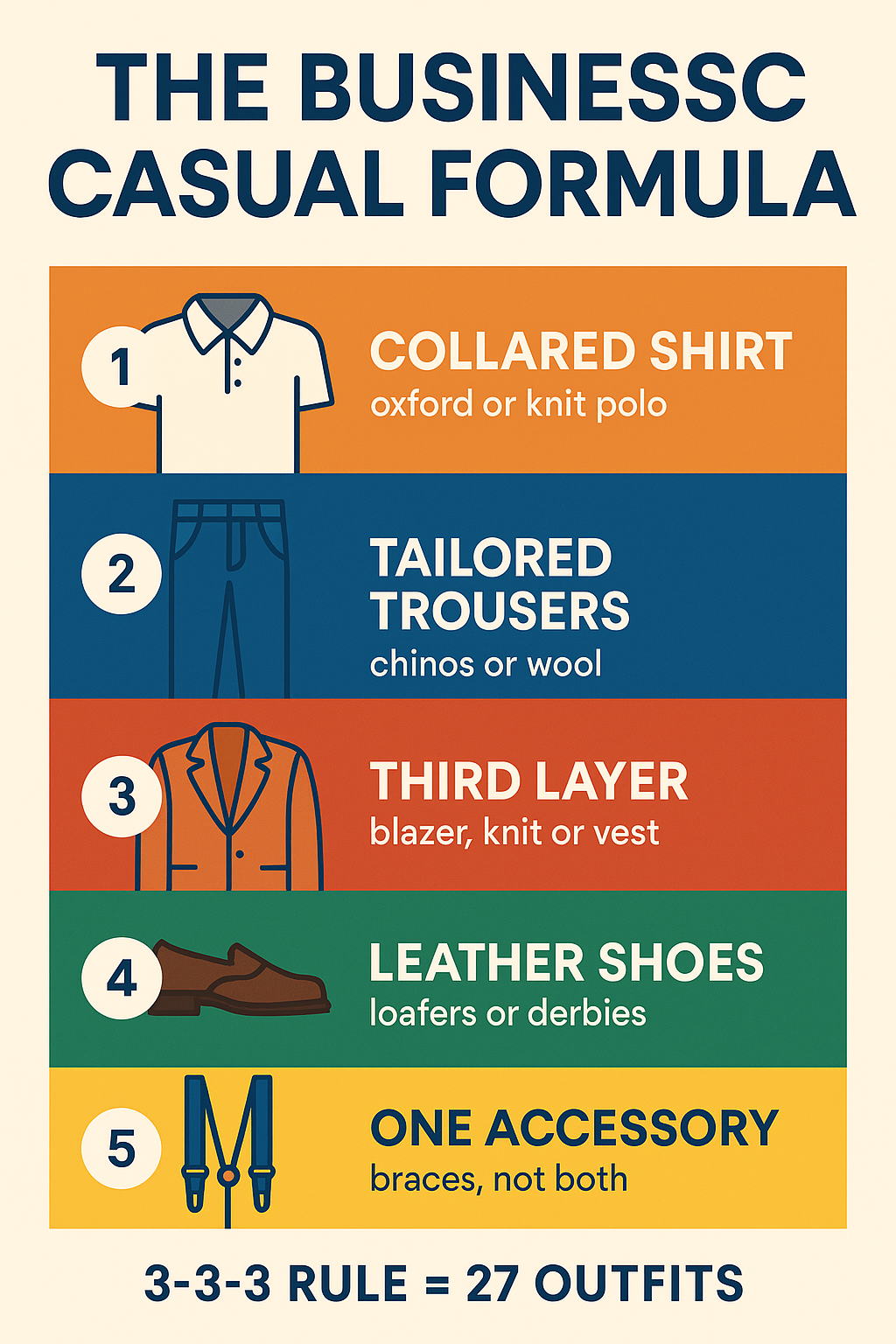
Business casual is professional clothing without the suit-and-tie uniform. The working formula is simple: a collared shirt or refined knit on top, tailored trousers or chinos on the bottom, a leather shoe, and an optional third layer such as a blazer, cardigan, or vest.
The dress code is also loosening fast. Monster’s January 2025 workplace poll found that 43% of workers had not worked in an office with a dress code in the past year, and among those who did have one, 63% said their office leans business casual (Monster, 2025 dressing for work poll). Translation: your office probably expects business casual and probably will not tell you what that means.
What is acceptable for business casual for men?
Acceptable business casual means anything that reads intentional, tailored, and free of athletic or beachwear DNA. Use this as your shopping list.
- Tops: Oxford cloth button-downs, poplin dress shirts, knit or pique polos, merino crewnecks and quarter-zips, fine-gauge turtlenecks.
- Bottoms: Wool or wool-blend trousers, cotton chinos, flannel trousers in winter, dark straight-leg denim in relaxed offices.
- Layers: Unstructured blazers, sport coats, cardigans, waistcoats, overshirts in heavier fabrics.
- Shoes: Loafers, derbies, chukka boots, monk straps, minimal leather sneakers in white or brown.
- Accessories: Leather belt or suspenders, a simple watch, a knit or grenadine tie if you want one, a leather bag.
What is the 3-3-3 rule for men?
The 3-3-3 rule is a capsule wardrobe method: pick 3 tops, 3 bottoms, and 3 pairs of shoes that all coordinate, and you get 27 complete outfits from nine items. It is the fastest way to build a business casual rotation without buying much.
A workable business casual 3-3-3 looks like this:
- 3 tops: white oxford shirt, light blue oxford shirt, charcoal merino crewneck.
- 3 bottoms: grey wool trousers, stone chinos, navy chinos.
- 3 shoes: brown leather loafers, dark brown derbies, clean white leather sneakers.
Every combination works because the colors are neutral and the formality level is consistent. Add one navy blazer and the same nine pieces cover client meetings too.
Are jeans OK for business casual for men?
Usually yes, with conditions. Suitsupply’s menswear editorial team puts it plainly: jeans can be business casual “if you choose the right pair and style them thoughtfully,” with fit, color, and condition doing the deciding (Suitsupply Journal).
The safe version is dark indigo or black, straight or slim-straight, zero distressing, zero fading, hemmed to break cleanly on the shoe. Then dress everything else up: a tucked oxford, a blazer or knit layer, and leather shoes rather than runners. If you want the full breakdown of denim styling with braces instead of a belt, we covered that in our step-by-step guide to suspender pairings.
What is not acceptable for business casual?
Anything built for the gym, the beach, or the couch. That means hoodies, graphic tees, tank tops, athletic shorts, cargo shorts, leggings, flip-flops, running sneakers, ripped denim, sweatpants, and anything with a visible logo doing the talking. Wrinkled or ill-fitting clothing fails the code too, even when the pieces themselves are correct.
13 Business Casual Outfit Ideas for Men
Each of these business casual men ideas is a complete, wearable combination. Every one of them can be built from a nine-to-twelve piece wardrobe, and most take 30 seconds to assemble on a weekday morning.
1. Light Blue Oxford Shirt + Stone Chinos + Brown Loafers
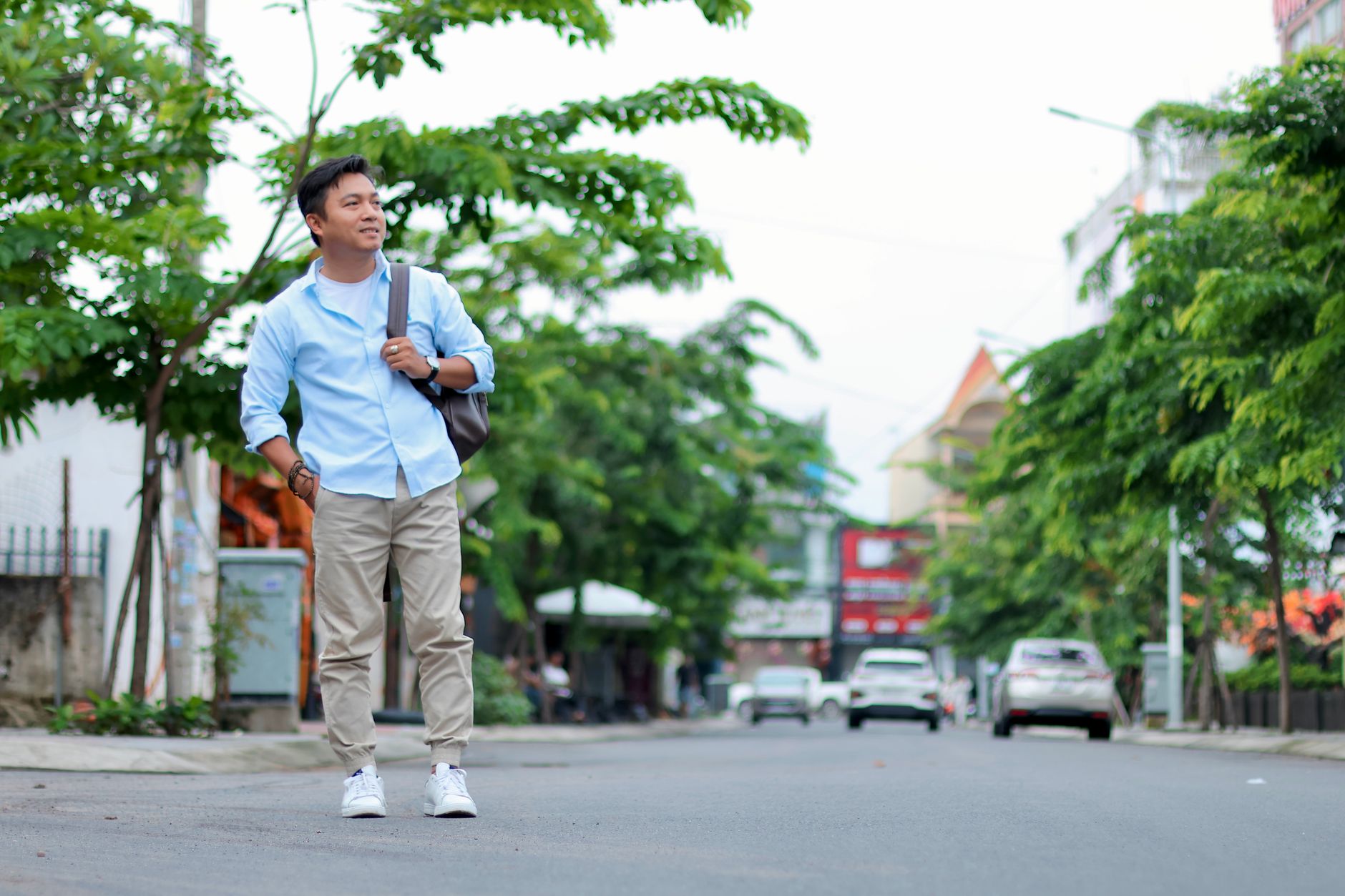
This is the default business casual outfit, and it works in almost every office in the country. The oxford’s texture keeps it from looking like a dress shirt missing its tie, and stone chinos read warmer and less corporate than grey trousers.
Tuck the shirt, roll the cuffs twice if the office is relaxed, and keep the loafers polished. Add a brown leather belt or a matching pair of braces to sharpen the waistline.
2. Navy Blazer + White Shirt + Grey Wool Trousers
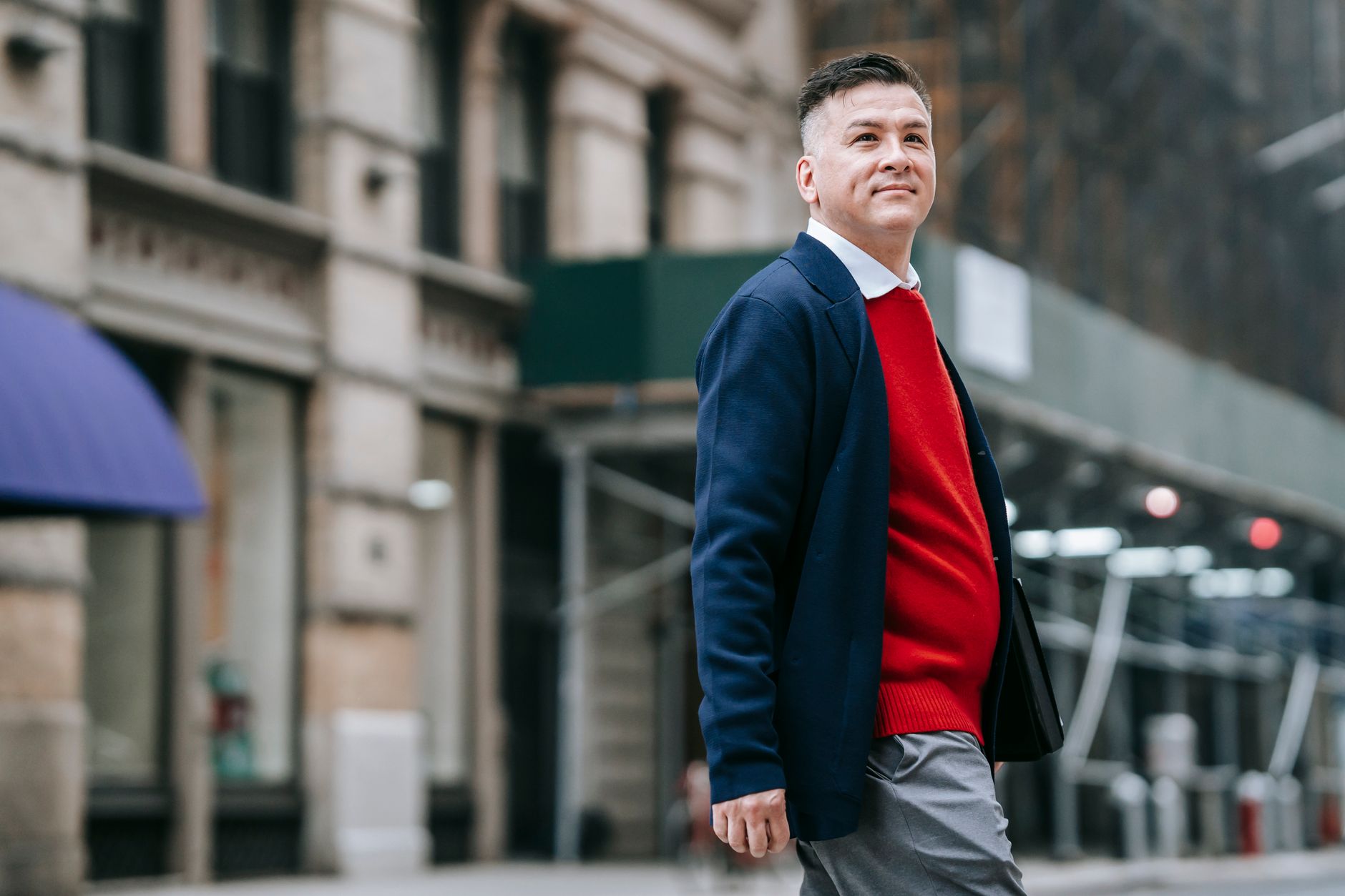
The most useful business casual outfit a man can own. Navy over grey is the oldest trick in menswear because the contrast flatters nearly every complexion and photographs well on video calls.
Choose an unstructured or half-lined blazer so it does not read as an orphaned suit jacket. Skip the tie and leave the top button open. Dark brown derbies finish it.
3. Charcoal Merino Crewneck Over a Collared Shirt

A thin merino sweater over a button-down is the easiest way to look put together in cold months without a jacket. The collar and cuffs peeking out do all the work.
Keep the sweater fine-gauge, never chunky, and make sure the shirt collar sits flat. Charcoal, navy, and oatmeal are the three colors worth owning.
4. Knit Polo + Navy Chinos + White Leather Sneakers
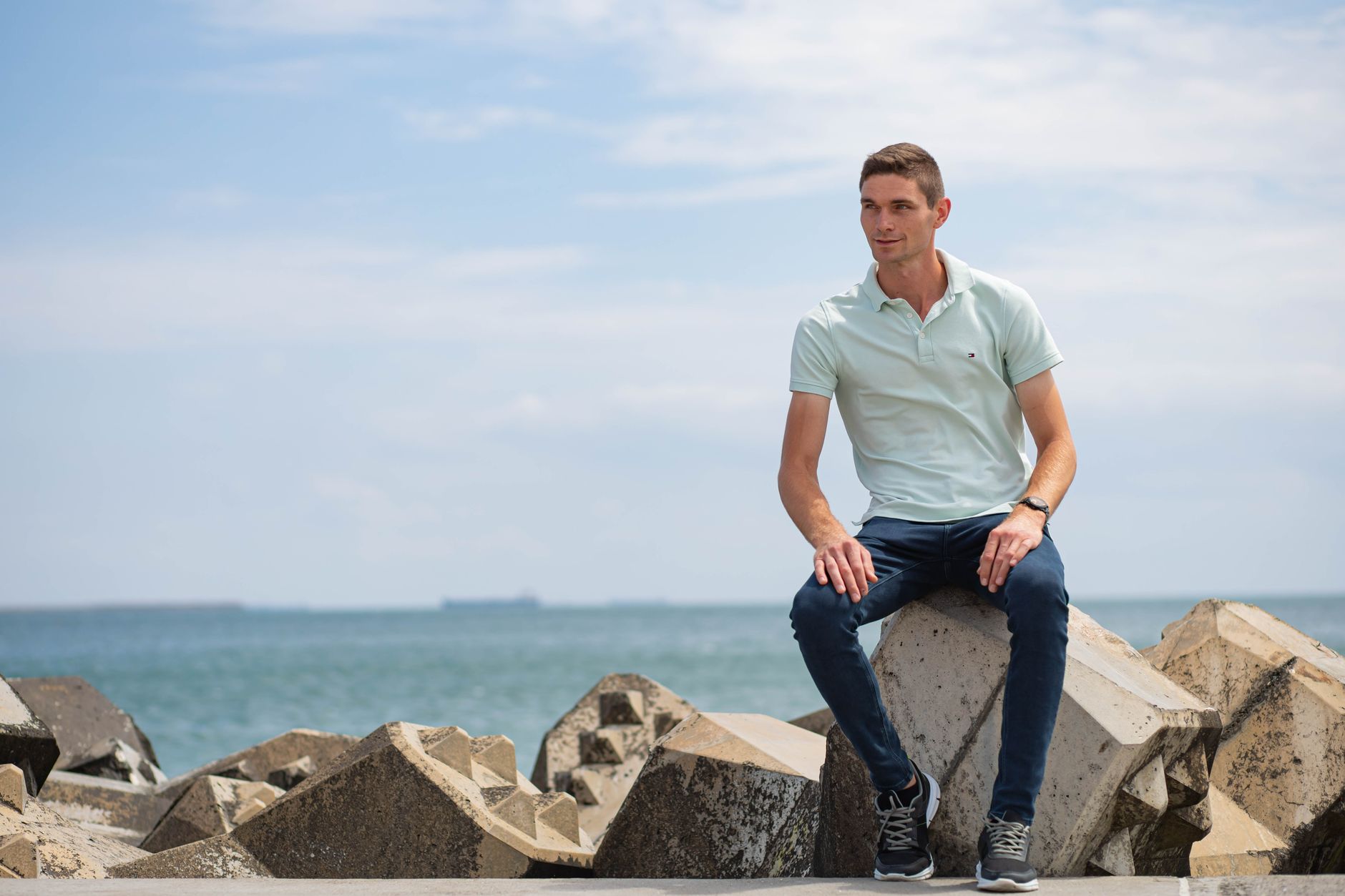
A knit polo is the summer workhorse. Unlike a pique sports polo, a knit or jersey polo has a structured collar that stands up on its own and reads closer to a shirt than a golf top.
Keep the sneakers minimal, all-leather, and genuinely clean. Scuffed sneakers sink an otherwise sharp outfit faster than any other single item.
5. Dark Denim + Sport Coat + Suspenders
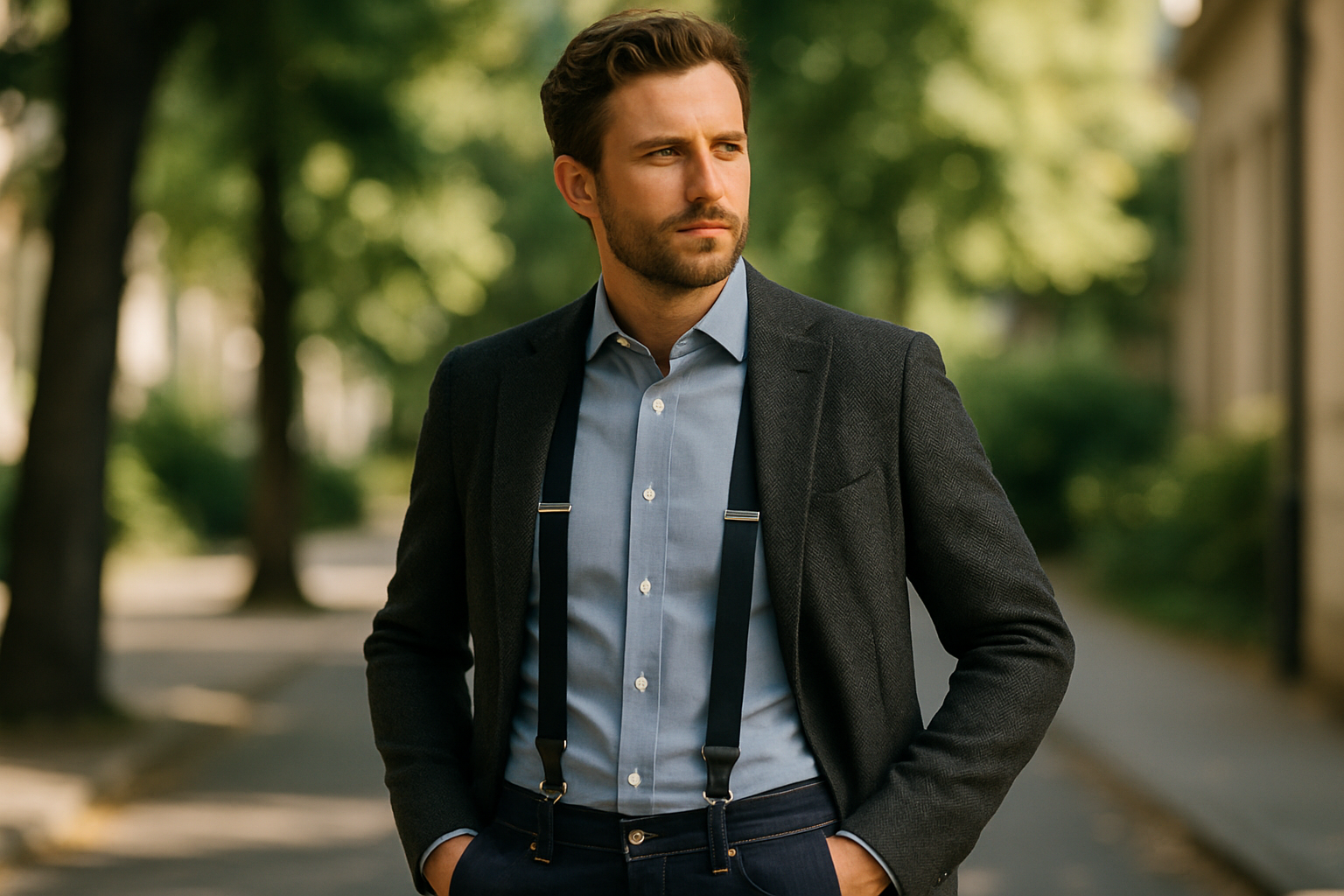
The Friday outfit that still looks like you run something. Dark, unwashed denim plus a textured sport coat in tweed, hopsack, or cotton reads deliberate rather than dressed-down.
Wearing braces instead of a belt keeps the jeans hanging from your shoulders, which means a cleaner drape and no bunching at the waist. Choose button-on braces if your jeans have belt loops you would rather ignore, and see our notes on which trousers work with suspenders before committing.
6. Shirt + Waistcoat + Wool Trousers
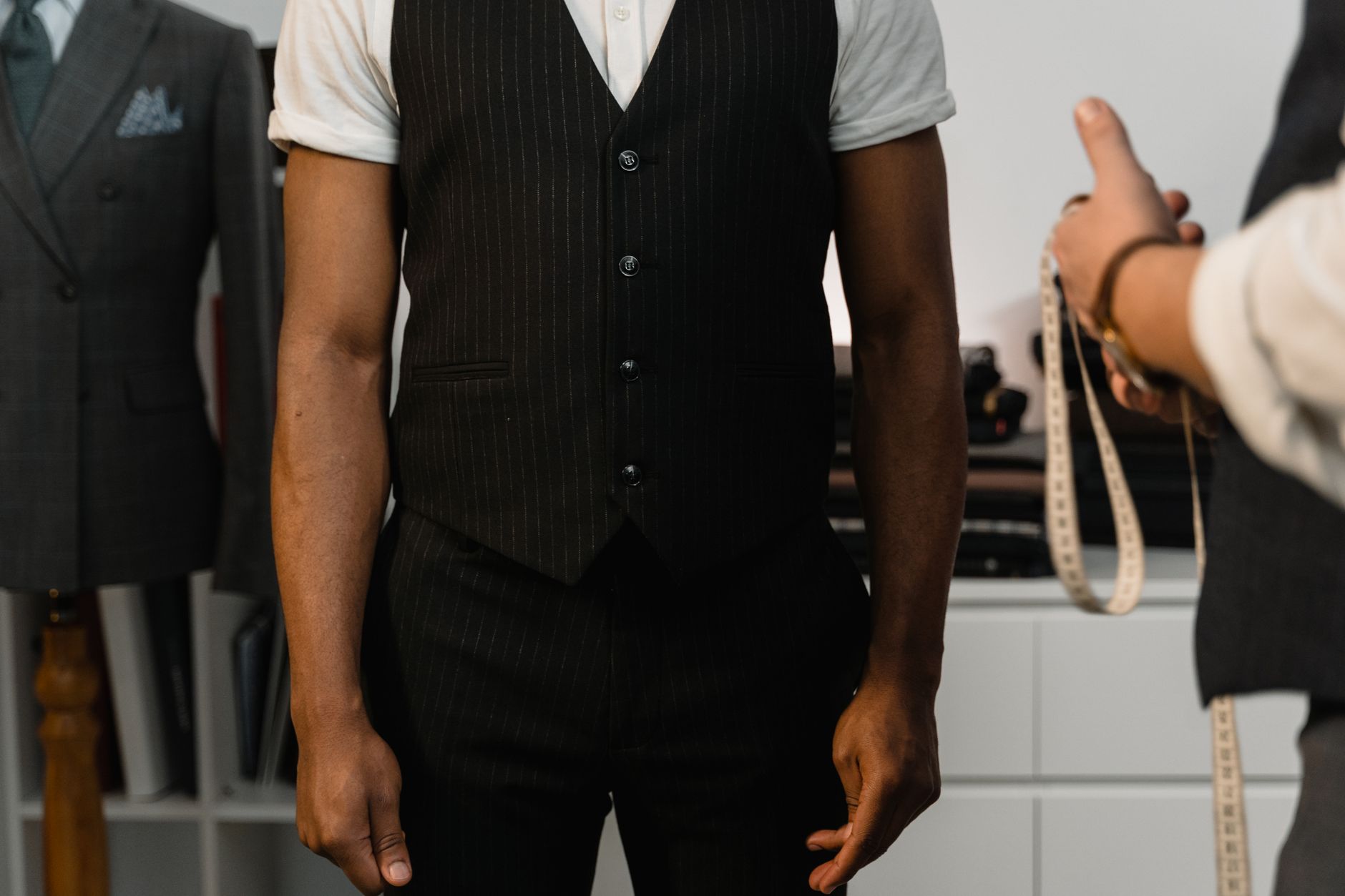
A waistcoat is the third layer for men who find blazers too warm or too formal. It adds structure across the chest and hides the shirt-to-trouser transition entirely.
Match the waistcoat to the trousers for a near-suit effect, or contrast it for something more relaxed. If you are layering braces underneath, the difference between premium and cheap hardware shows immediately in how flat the straps lie.
7. Chambray Shirt + Khaki Chinos + Chukka Boots
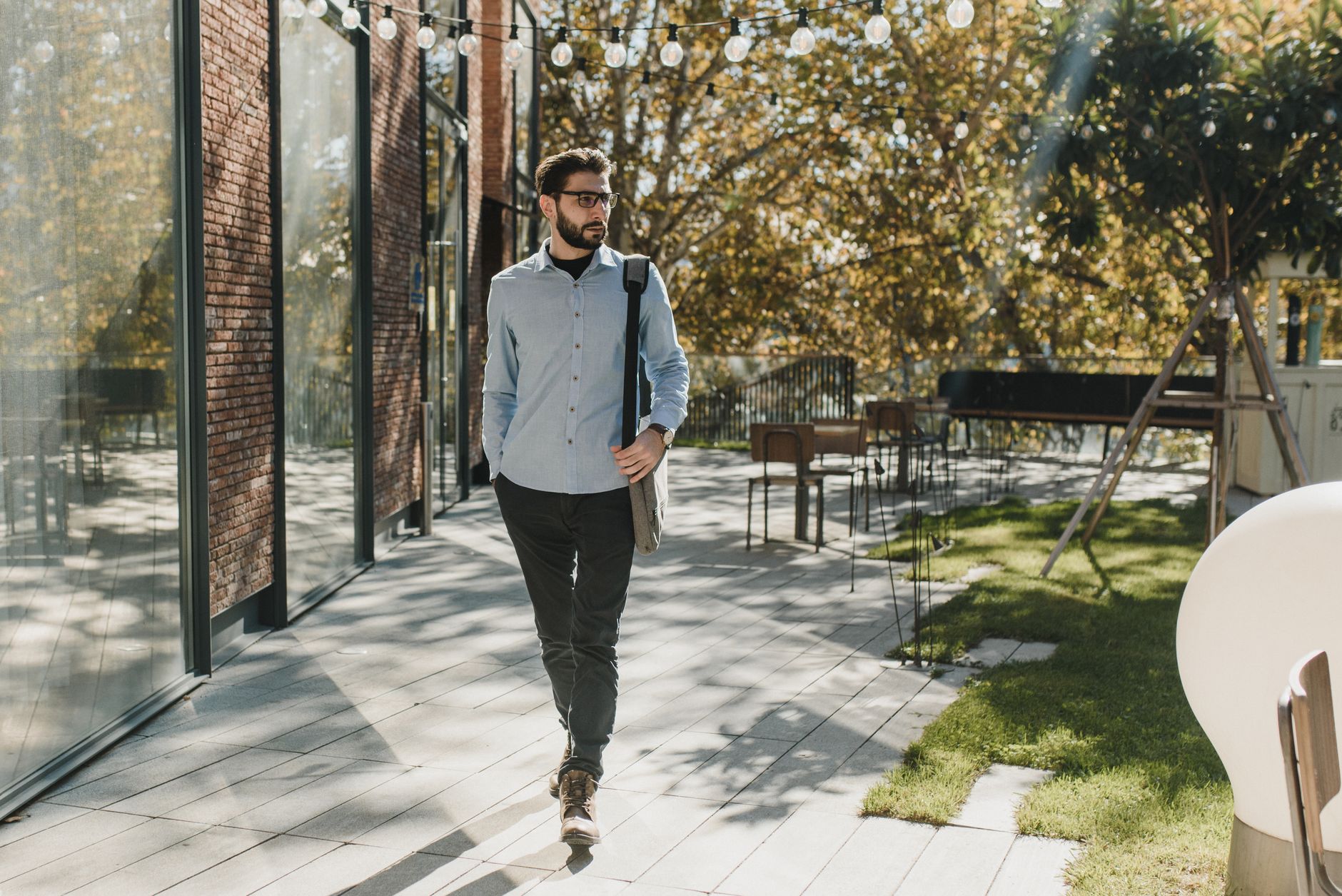
Chambray gives you the color of denim with the weight and drape of a shirt. Paired with khaki, it is the least corporate business casual outfit on this list while still being office-appropriate.
Suede chukkas in sand or dark brown keep the palette warm. This one suits creative studios, agencies, and any office where a blazer would look out of place.
8. Fine-Gauge Turtleneck + Blazer + Dark Trousers
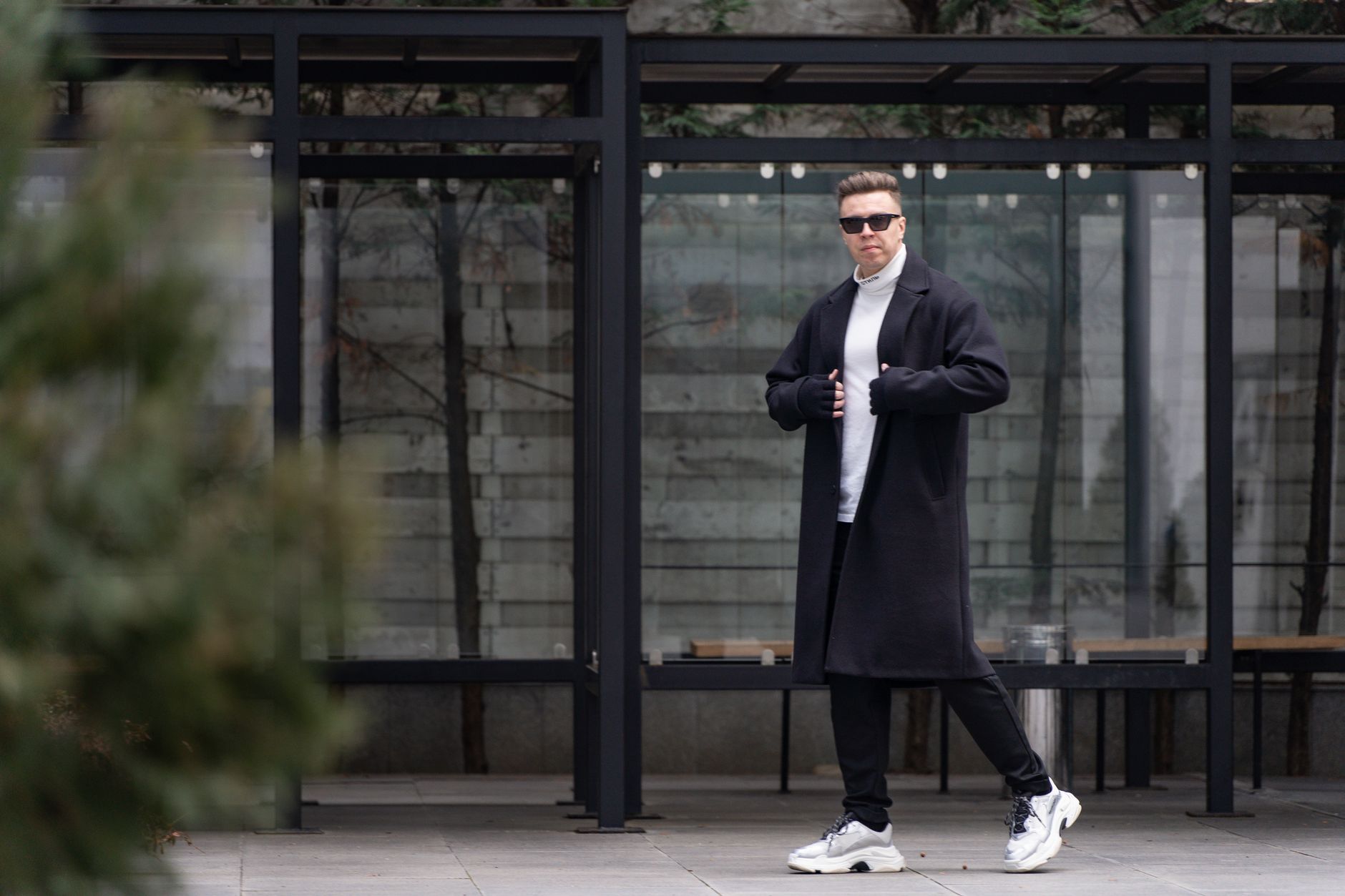
The winter alternative to the shirt-and-blazer formula. A thin turtleneck under a jacket is clean, warm, and requires zero accessories, which is exactly the point.
The rule is fit: the knit must be thin enough to sit under a jacket without bulk, and the neck should fold once without swallowing your jaw. Black, charcoal, and cream are the safest.
9. Overshirt + Oxford + Flannel Trousers
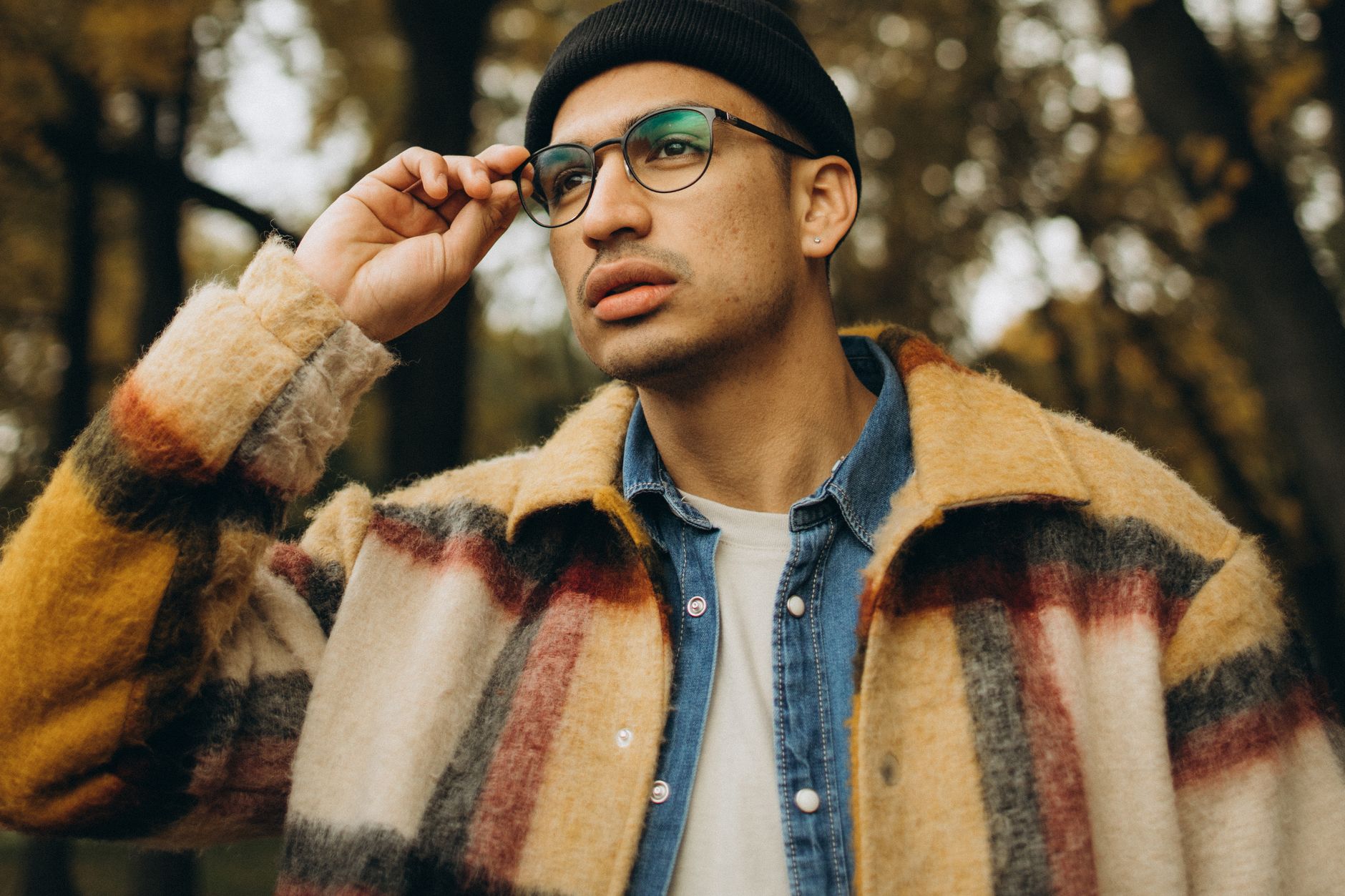
An overshirt (or shirt jacket) in wool, moleskin, or heavy cotton replaces a blazer in offices where jackets feel stiff. It reads modern without reading casual.
Keep it in a solid mid-tone: olive, brown, navy, or grey. Because the overshirt has no lapels, keep the trousers properly tailored so the silhouette stays sharp.
10. Quarter-Zip Merino + Chinos + Derbies

The quarter-zip is the most misused piece in business casual, because most men wear the fleece version. In merino or cotton, with a collar that holds its shape, it is genuinely smart.
Wear it over a shirt with the zip halfway down, or on its own with a clean neckline. Avoid anything with a corporate logo embroidered on the chest.
11. Linen-Blend Shirt + Tapered Trousers + Loafers
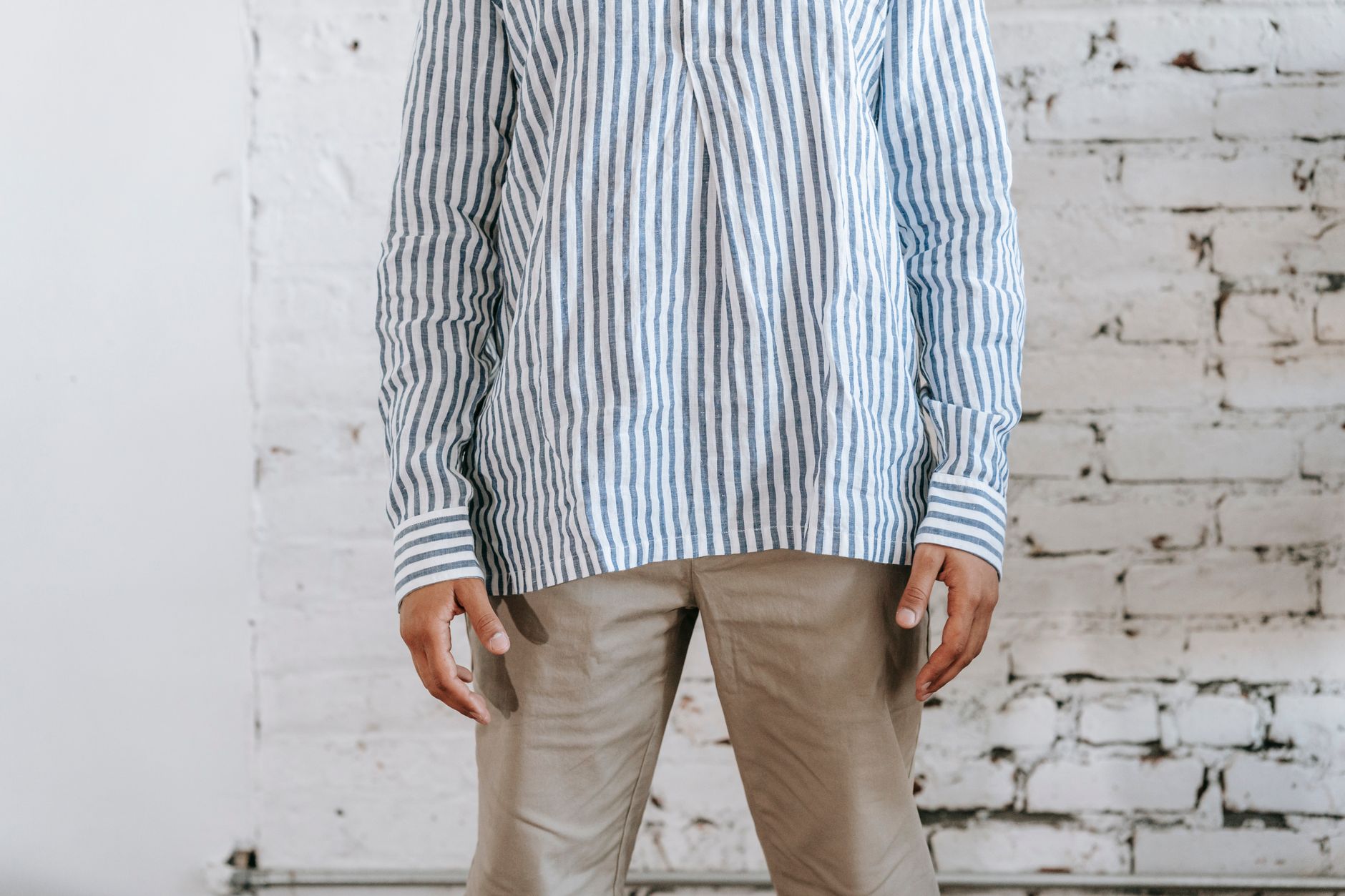
For heat, a linen-cotton blend beats pure linen: it breathes almost as well and wrinkles far less by 3pm. Tapered trousers in a lightweight wool or tropical weave keep air moving.
Go with a spread or camp-adjacent collar, tuck it in, and wear loafers with no-show socks. A belt is optional here, which is one reason braces are worth considering in summer.
12. Monochrome Charcoal: Knit + Trousers + Black Loafers
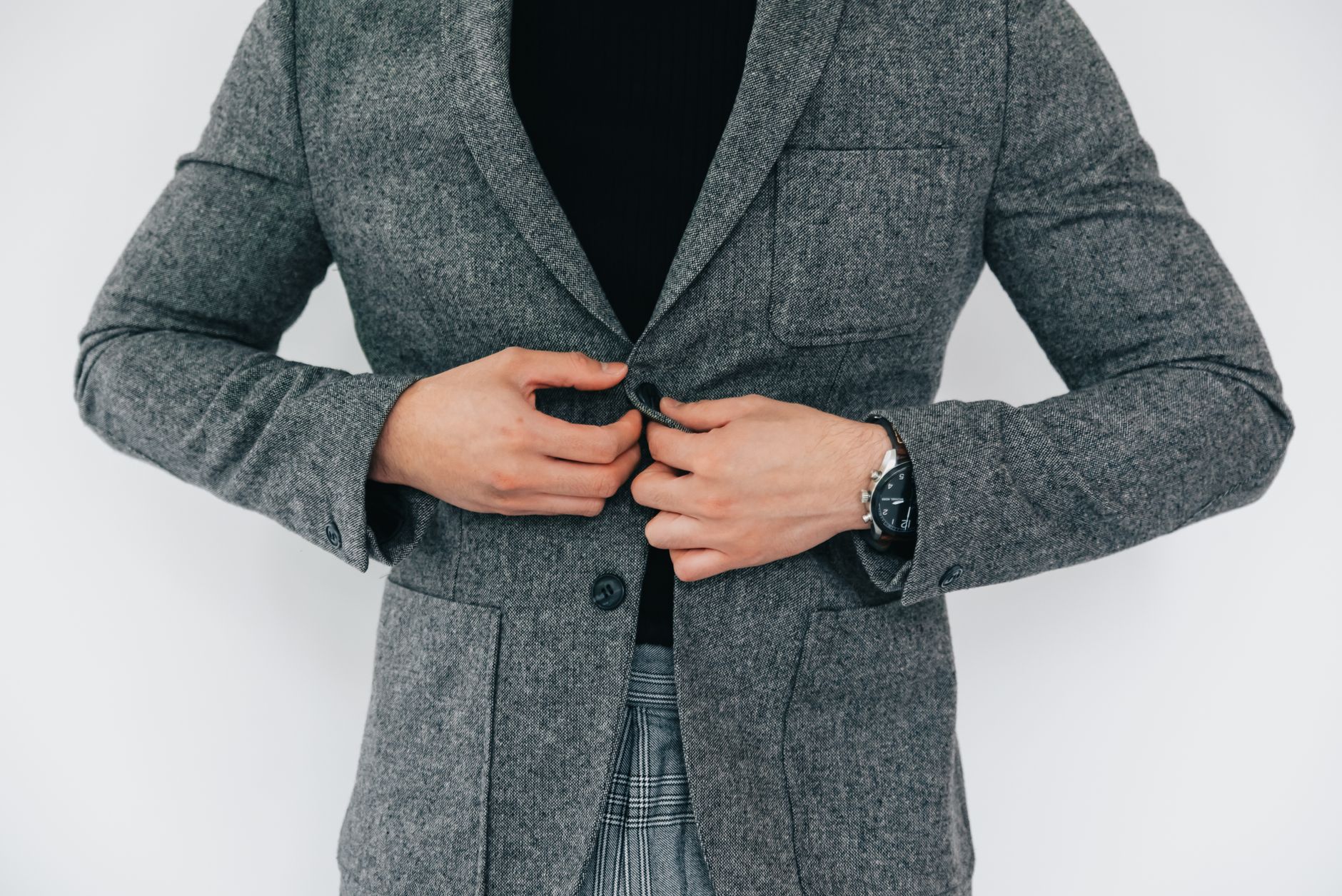
Tonal dressing is the quickest way to look taller and more considered. Charcoal on charcoal with black leather is nearly impossible to get wrong.
The trick is varying texture so the outfit does not flatten: a ribbed knit against smooth flannel, or a cotton twill against a wool top. Keep hardware minimal.
13. Striped Shirt + Braces + Grey Trousers

The old-school banker look, updated by losing the tie and the jacket. A bengal or university stripe shirt with braces is the most confident outfit on this list and still entirely office-safe.
Keep the braces a solid color pulled from the shirt’s stripe, use button-on ends with dress trousers, and never add a belt. Our complete guide to wearing suspenders covers the fit and attachment details.
Business Casual Footwear Guide
Shoes decide whether an outfit reads business casual or just casual. The safest options are loafers, derbies, and chukka boots in leather or suede, with minimal white or brown leather sneakers acceptable in most modern offices.
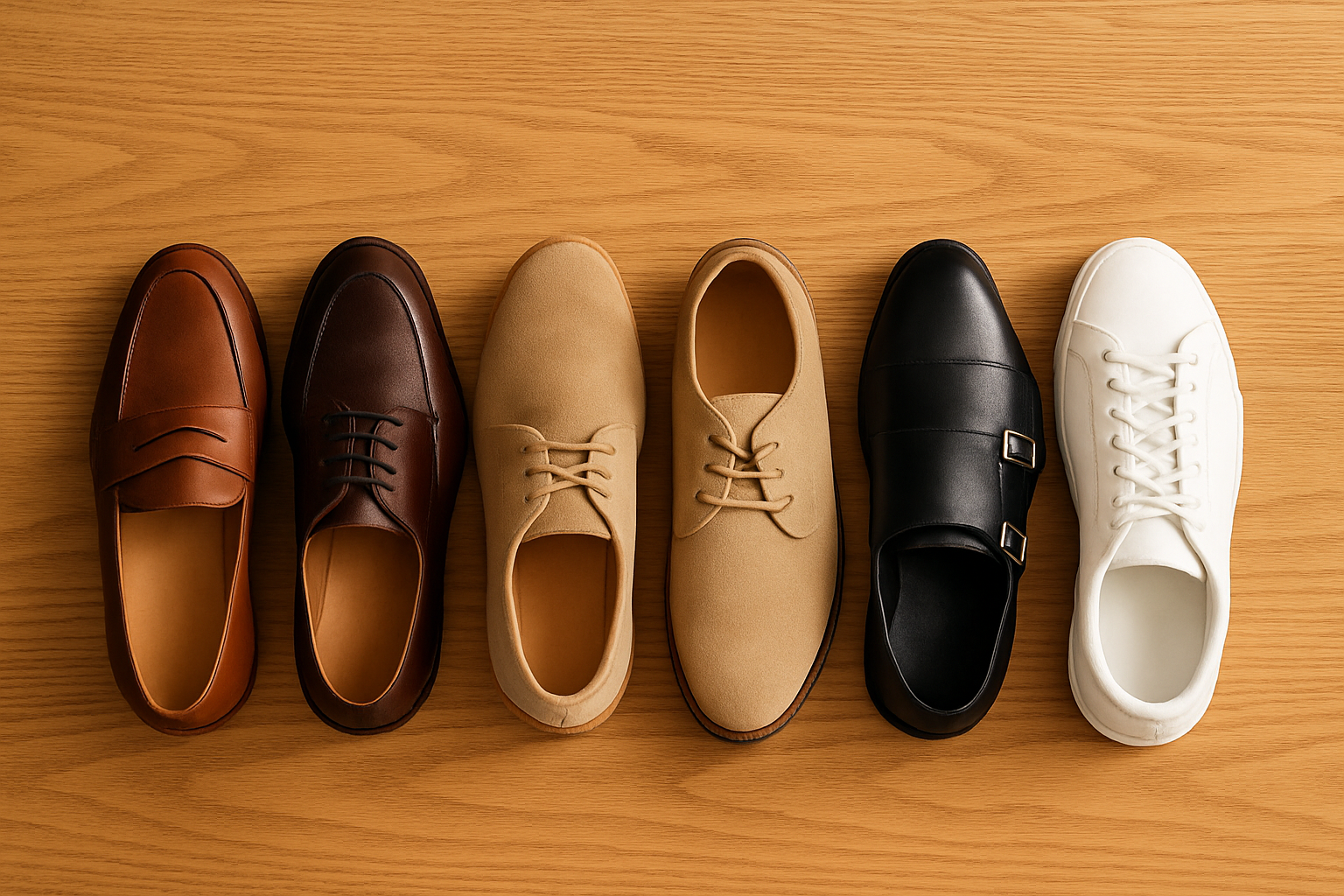
| Shoe | Formality | Best with | Office fit |
|---|---|---|---|
| Penny or horsebit loafer | High | Wool trousers, chinos | Safe everywhere, year-round |
| Derby / blucher | High | Flannel, worsted wool | Best for conservative offices |
| Chukka boot (suede) | Medium | Chinos, dark denim | Creative and hybrid offices |
| Monk strap | High | Trousers, sport coat looks | Client-facing days |
| Minimal leather sneaker | Low to medium | Chinos, denim, knit polos | Tech, startups, casual Fridays |
| Running or trail shoe | None | Nothing in this guide | Never |
Two rules cover most mistakes. First, match leather tones loosely between shoes and belt or brace leather, not exactly. Second, socks should relate to the trousers, not the shoes, and white athletic socks belong nowhere near business casual.
Accessories That Finish the Look
Accessories are what separate a man who follows the dress code from a man who owns it. Keep the count low: one waist solution, one watch, and at most one optional extra such as a tie, pocket square, or knit scarf.
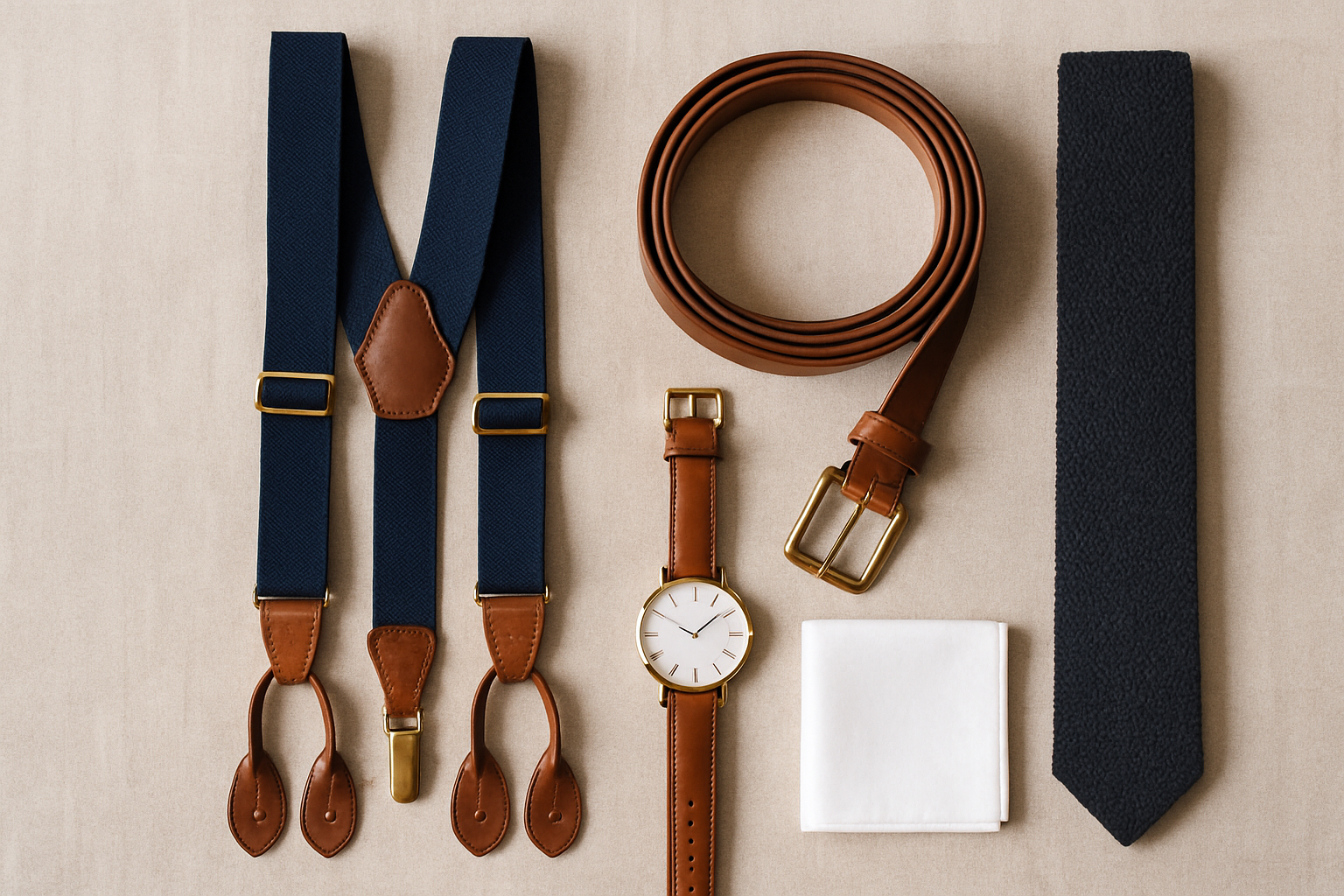
- Suspenders: The cleanest waist solution for tailored trousers. Braces hold trousers at your natural waist so the drape stays straight and the shirt stops bunching. Button-on leather ends read dressier than clips.
- Belt: Fine with chinos and denim. Keep the leather smooth and the buckle small and matte.
- Watch: A leather-strap dress watch or a simple steel bracelet. Rubber sports watches undercut the outfit.
- Tie: Optional in business casual. If you wear one, choose knit, grenadine, or wool for texture rather than shine.
- Bag: Leather briefcase or a structured canvas-and-leather tote. Backpacks work if they are not nylon gym bags.
One hard rule: never wear a belt and suspenders at the same time. It is redundant, it looks cluttered at the waist, and it is the fastest way to signal that the outfit was assembled without a plan. We explain why the two should not be combined in more detail, and the same logic applies when you step up to a full suit.
If your braces feel like they are pulling your shoulders or sagging at the back, the length is wrong, not the style. Here is how to set the length correctly so the straps sit flat from shoulder to waistband.
Ready to upgrade the one accessory most men skip? Browse the suspender styles worth owning for classic, work, and novelty braces built to hold tailored trousers exactly where they should sit.
Summer vs Winter Business Casual
The formula stays identical across seasons. Only the fabric weight, the layer, and the shoe change. Swapping materials instead of silhouettes is what keeps a small wardrobe working year-round.
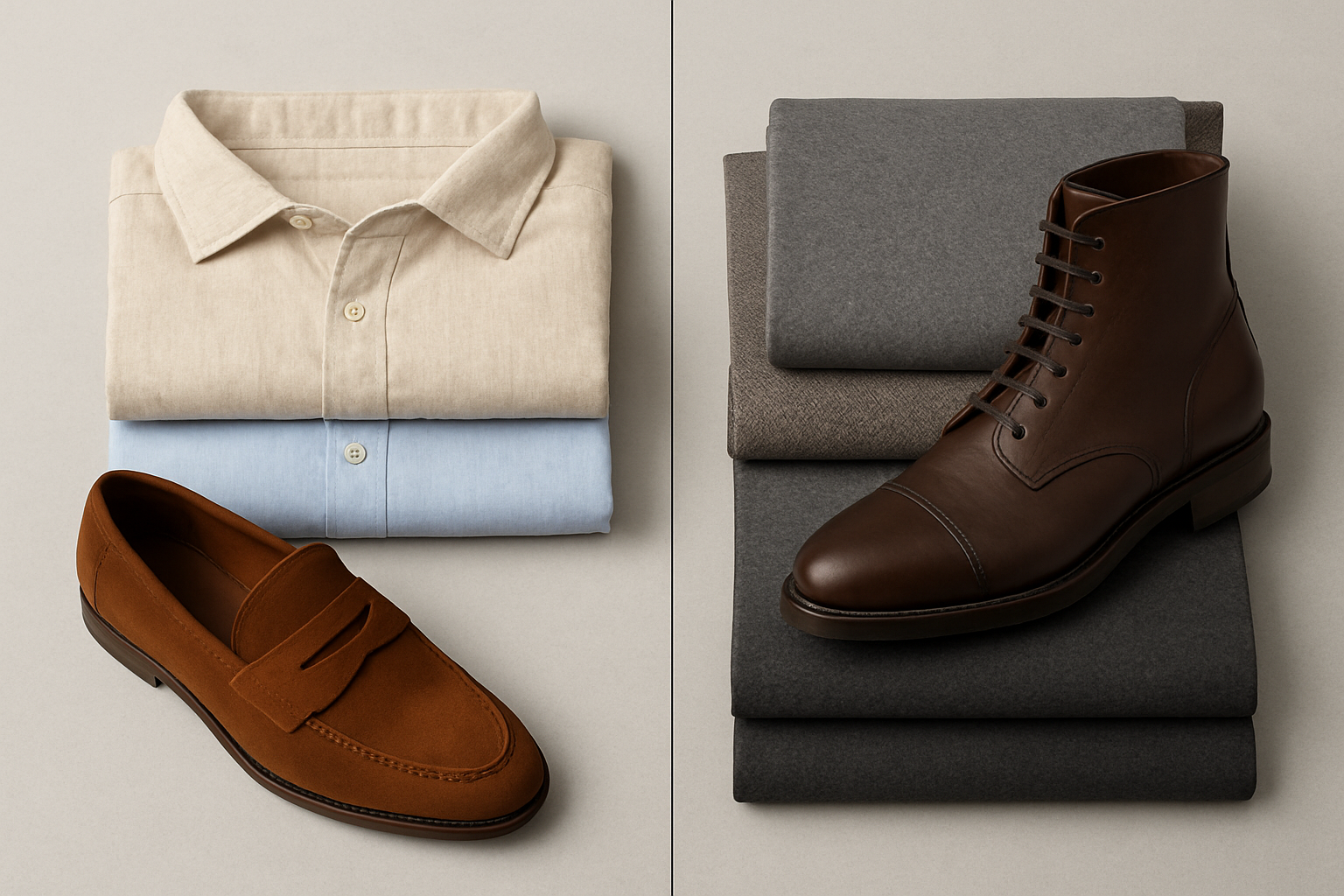
| Element | Summer business casual | Winter business casual |
|---|---|---|
| Shirt | Linen-cotton blend, lightweight poplin, knit polo | Oxford cloth, brushed cotton, flannel shirt |
| Trousers | Tropical wool, lightweight chinos, cotton-linen | Flannel, heavy twill, corduroy, wool blends |
| Layer | Unlined blazer or none at all | Merino knit, waistcoat, tweed sport coat, overshirt |
| Shoes | Loafers with no-show socks, woven leather | Derbies, chukka or dress boots, ribbed socks |
| Colors | Stone, sand, light blue, off-white, olive | Charcoal, navy, brown, burgundy, forest |
| Accessories | Lightweight braces, no belt, minimal watch | Wool tie, knit scarf, leather-ended braces |
One summer warning: shorts are not business casual in a traditional office, no matter how tailored. Save them for creative studios with an explicitly relaxed policy, and keep the rest of the outfit sharp if you do go that route.
What Not to Wear: 8 Common Business Casual Mistakes
Most of the business casual men ideas above fail for the same reasons, and the wrong item is rarely one of them. They are about fit, condition, and mixing formality levels that do not belong together.
- Wearing an orphaned suit jacket. A suit jacket without its trousers looks like a mismatched suit. Use a textured sport coat or unstructured blazer instead.
- Ill-fitting trousers. Too long, too wide, or too tight at the seat ruins everything above it. A tailor charges little to fix the hem and taper.
- Athletic shoes that are actually athletic. Running shoes, trail shoes, and chunky trainers are the single most common mistake in this dress code.
- The untucked dress shirt. Dress shirts have long tails made for tucking. If you want untucked, buy a shirt cut for it.
- Belt and braces together. Pick one. Two waist solutions cancel each other out.
- All one color with no texture. A monochrome outfit in a single flat fabric reads like a uniform. Vary the material.
- Wrinkled everything. Business casual has less structure than a suit, so wrinkles show more, not less. Steam it.
- Ignoring grooming. A relaxed dress code does not relax the haircut, the beard line, or the shoe polish.
Getting the details right is mostly about repetition. If braces are new to you, read the dos and don’ts before you wear them to the office, because the small errors there are visible from across a room.
Key Takeaways
- Business casual for men is a collared shirt or fine knit, tailored non-athletic trousers, leather shoes, and an optional third layer. No tie needed.
- It is the most common workplace dress code in the U.S., worn most days by 41% of workers according to Gallup.
- The 3-3-3 rule (3 tops, 3 bottoms, 3 shoes) produces 27 outfits from nine coordinated pieces.
- Dark, undistressed jeans pass in most offices when the rest of the outfit is dressed up with a shirt, layer, and leather shoes.
- Footwear decides the formality level: loafers and derbies are always safe, minimal leather sneakers are usually fine, athletic shoes never are.
- Change fabric weight, not silhouette, between seasons: linen blends and tropical wool in summer, flannel and merino in winter.
- Suspenders replace a belt for cleaner trouser drape. Never wear both at once.
- Fit and condition matter more than the specific garments. Wrinkled and ill-fitting kills an otherwise correct outfit.
People Also Ask
Is a polo shirt business casual?
Yes, when it is a knit or jersey polo with a structured collar in a solid color. Performance polos with logos, mesh panels, or golf branding read as sportswear, not business casual.
Can I wear sneakers with business casual?
Minimal leather sneakers in white, brown, or black are acceptable in most modern offices. The shoe must be all-leather, low-profile, free of visible branding, and clean. Canvas, running, and chunky trainers do not qualify.
Is a t-shirt ever business casual?
A plain t-shirt on its own is not business casual, but a heavyweight plain tee under a blazer works in creative offices. There is no graphic, no logo, and no crew-neck sagging. Keep it dark, keep it fitted, and treat it as the exception rather than the rule.
Do I need to wear a tie for business casual?
No. A tie is optional in business casual and slightly elevates the outfit when you add one. Choose knit, wool, or grenadine ties, which have texture and pair better with non-suit outfits than shiny silk.
What is the difference between business casual and smart casual?
Business casual is the office baseline: shirt, trousers, leather shoes. Smart casual is a notch more relaxed and more personal, allowing denim, sneakers, and bolder colors while still requiring tailoring and intent. Smart casual is for dinner and events, business casual is for work.
Are suspenders business casual?
Yes. Suspenders are business casual when they are a solid or subtly patterned color, worn without a belt, and attached to trousers that suit them. Button-on braces with wool trousers are the dressiest version; clip-ons with chinos are the most relaxed.
What colors work best for business casual?
Navy, charcoal, grey, white, light blue, stone, and brown form the core. Build almost everything from those, then add one seasonal accent such as olive in autumn or burgundy in winter. Neutral bases mean every piece coordinates with every other piece.
Is a hoodie ever acceptable at work?
Not under a business casual dress code. Even a premium merino hoodie reads as loungewear in a professional setting. The closest acceptable substitute is a quarter-zip merino sweater or a shawl-collar cardigan.
Can I wear shorts for summer business casual?
Only in offices that explicitly allow them, which is rare. Tailored chino shorts with a collared shirt and loafers is the most presentable version, and even then it is a creative-industry option rather than a general one.
How many business casual outfits do I actually need?
Nine coordinated pieces built on the 3-3-3 rule cover a full working week with room to spare. Add a navy blazer, one pair of braces, and a second pair of shoes and you have a rotation that lasts years.
What kind of trousers work best with suspenders at the office?
Wool or wool-blend trousers with a proper waistband and, ideally, buttons for braces. Low-rise trousers fight against suspenders because the straps pull at an awkward angle. Mid-rise or high-rise is the right choice.
Does business casual differ by industry?
Significantly. Finance, law, and consulting interpret business casual close to business professional, often expecting a jacket. Tech, media, and creative firms treat dark denim and clean sneakers as standard. Match the level one step above your team’s average, not below it.


