


Business Casual Dress Code Checklist for Men and Women
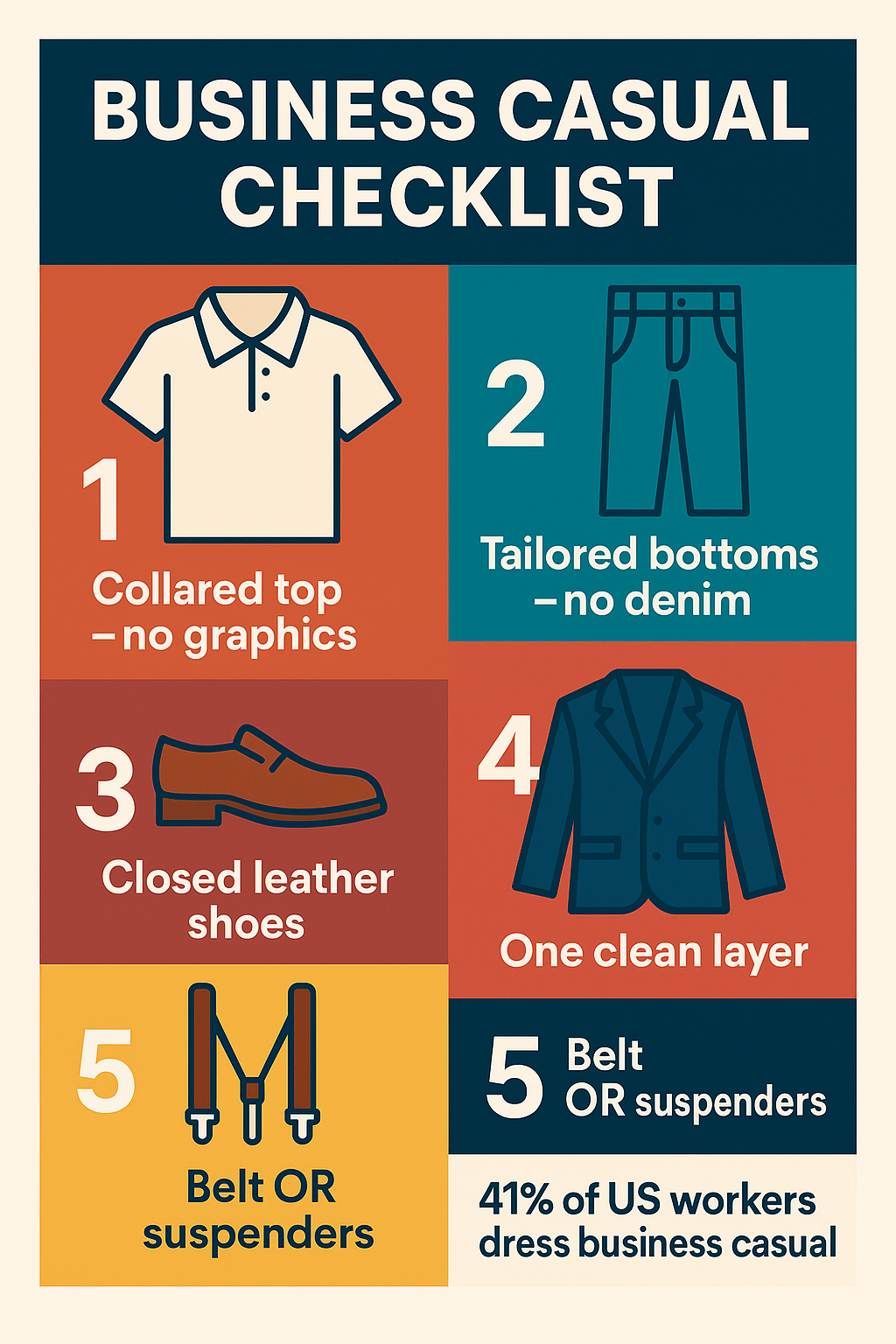
Business casual means no suit, no jeans-and-tee. The working definition: a collared shirt or blouse, tailored trousers or a skirt, closed leather shoes, and one polished layer such as a blazer or cardigan. This business casual dress code checklist gives you the yes list, the no list, and the accessory rules for men and women, plus what to wear for an interview, a normal office day, and a client meeting.
Business casual is now the most common way Americans dress for work. Gallup’s August 2023 Work and Education poll found 41% of U.S. workers wear business casual most days, while only 3% wear business professional clothing, the lowest figure Gallup has ever recorded (Gallup).
What this checklist covers
Use the business casual dress code checklist below as a jump menu, or read straight through.
- What is considered a business casual dress code?
- Business casual checklist for men: do’s and don’ts
- Business casual checklist for women: do’s and don’ts
- What is not acceptable for business casual?
- Business casual vs business professional vs business smart
- Situational examples: interview, office, client meeting
- Key takeaways
- People also ask
What is considered a business casual dress code?
Business casual is professional clothing without a matched suit. It keeps the structured pieces of office dress (collars, tailoring, leather shoes) and drops the formal ones (suit jackets with matching trousers, ties, stiff dress shoes).
The dress code is defined less by a rulebook than by the room you walk into. Kenda Fink, an HR compliance specialist quoted by the Society for Human Resource Management, put it plainly in a discussion about vague policies: a dress code “definitely is defined by your culture” (SHRM). A creative agency and a regional bank both say “business casual” and mean different things.
Three signals tell you whether an outfit clears the bar:
- Structure: the garment holds a shape. Woven shirts, tailored trousers, knit blazers, sheath dresses.
- Coverage: shoulders covered, hemlines at or near the knee, no visible underwear or midriff.
- Finish: pressed, lint-free, no fraying, no logos larger than a small chest emblem.
Pass all three and you are business casual, whatever the specific garment. Fail one and the outfit reads casual no matter how expensive it was.
Business casual checklist for men: do’s and don’ts
For men, business casual is a collared shirt, non-denim trousers, and leather shoes. Everything else is optional layering. Print this half of the business casual dress code checklist and you can pack for a work trip in five minutes.

Do wear
- Oxford cloth button-downs, poplin dress shirts, or a fine-gauge polo in solid colors, navy, white, light blue, grey
- Chinos, wool trousers, or flat-front cotton twills in navy, charcoal, khaki, olive
- An unstructured blazer, merino crewneck, or V-neck sweater over the shirt
- Leather belt or suspenders matched to your shoe color
- Dark, mid-calf socks that cover the leg when you sit
Don’t wear
- T-shirts, tank tops, or anything with a large graphic
- Cargo pants, shorts, sweatpants, or distressed denim
- Athletic sneakers, flip flops, work boots, or square-toed dress shoes
- Sports jerseys, hoodies, or fleece pullovers as the outer layer
- Wrinkled shirts pulled straight from a bag, the single most common failure
Business casual shoes for men
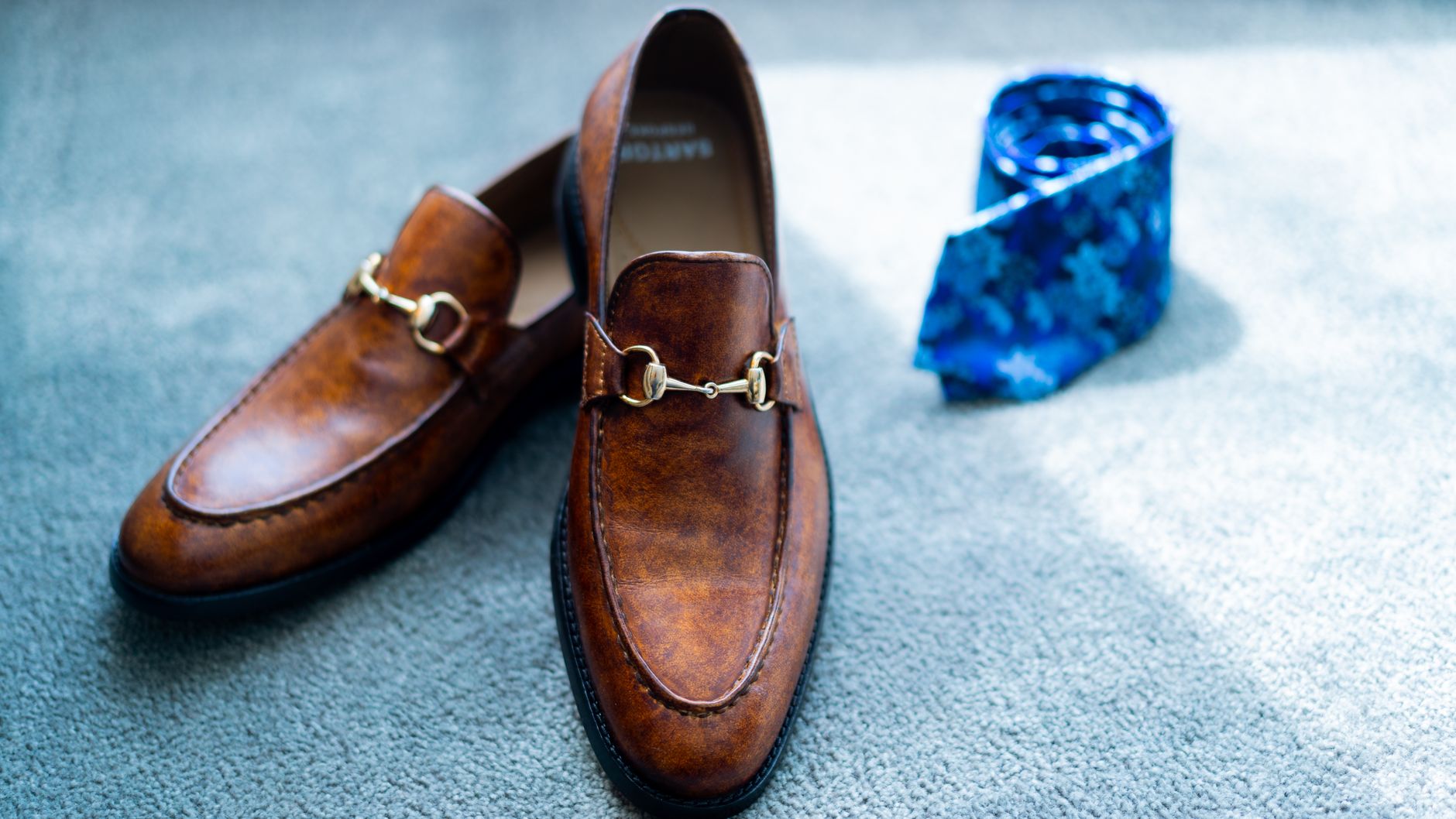
Choose leather or suede in a closed, lace-up or slip-on shape. Loafers, derbies, brogues, chukka boots, and clean minimalist leather sneakers all work in most offices. Ranked from safest to riskiest: derbies and loafers, then brogues and chukkas, then leather sneakers, then anything with a rubber running sole.
Accessories: belts, suspenders, watches
Accessories are where business casual gets personality without breaking the code. A leather watch, a simple metal buckle, and one point of color are plenty.
Suspenders are fully business casual when they are worn as intended: matched to trouser buttons or clipped to a proper waistband, adjusted so the trousers sit at your natural waist, and paired with a tucked shirt. Y-back styles in a solid or subtle stripe read office-appropriate; wide novelty patterns do not. If you have never worn them with a dress shirt, start with our guide to wearing suspenders properly and get the length right before you wear them to work.
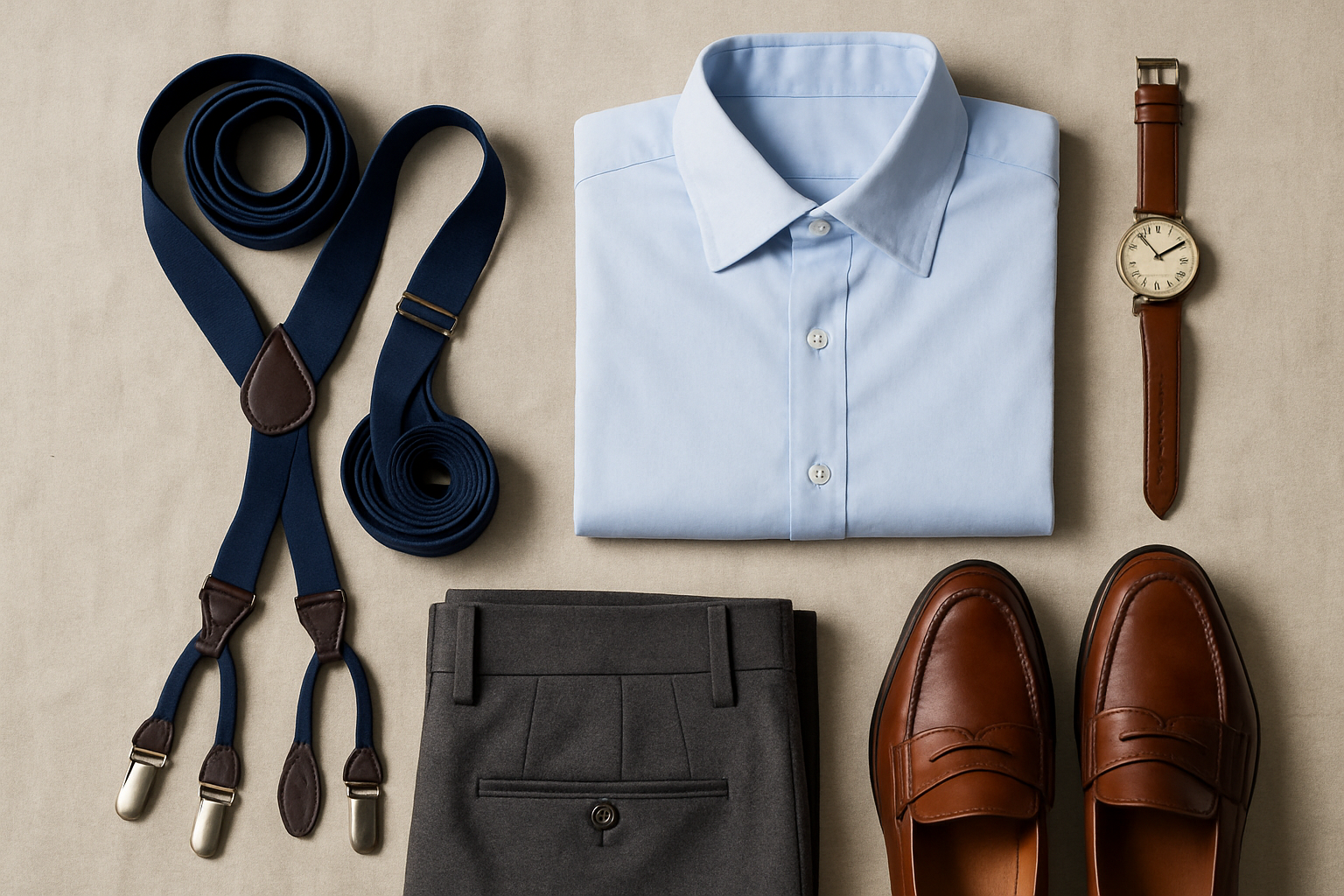
Two rules save most men from mistakes here. First, never wear a belt and suspenders at the same time; we explain why doubling up on waist hardware backfires. Second, keep the straps up. Leaving them hanging is a workshop look, not an office one, and the wider set of suspender etiquette rules covers the rest.
If your office allows a blazer-free day but you still want a put-together silhouette, suspenders under a knit sweater or worn with a waistcoat does the job. We covered the dressier end of that here.
Business casual checklist for women: do’s and don’ts
For women, business casual is a blouse, knit top, or sheath dress with tailored bottoms and a closed or low-heeled shoe. Gallup found 51% of working women dress business casual most days, the largest single group in the survey.
Do wear
- Blouses, shells, fine-knit sweaters, twin sets, or a collared shirt
- Tailored trousers, ankle pants, pencil or A-line skirts at or just above the knee, midi skirts
- Sheath, wrap, or shirt dresses; dark, structured jeans only if your office explicitly allows denim
- Blazer, longline cardigan, or a structured knit jacket as the third piece
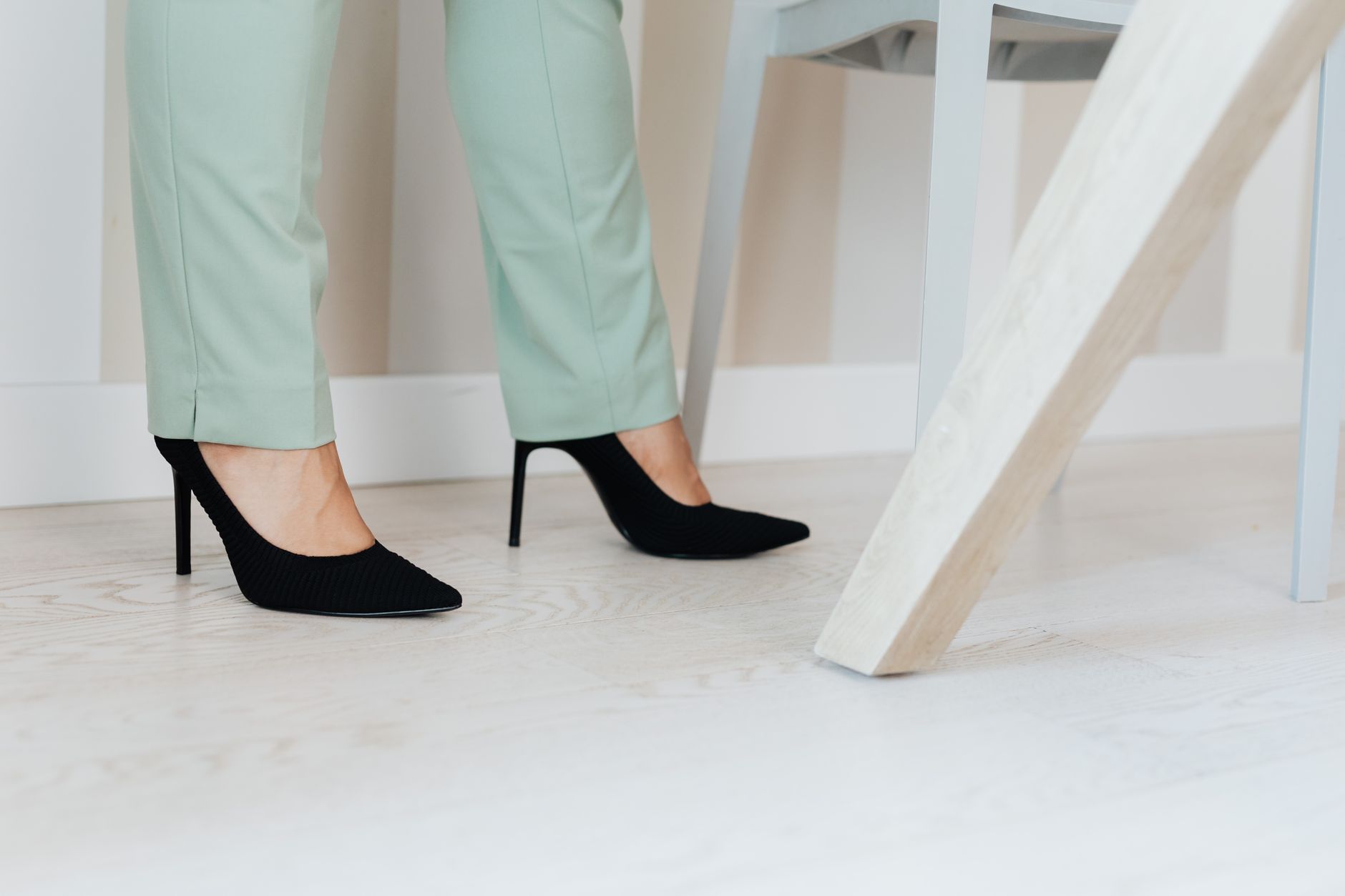
- Loafers, pointed flats, block heels, ankle boots, or low pumps
Don’t wear
- Spaghetti straps, strapless tops, crop tops, or sheer fabric without a layer under it
- Leggings as trousers, cutoffs, mini skirts, or bodycon dresses
- Flip flops, pool slides, stilettos above four inches, or beach sandals
- Beachy maxi dresses, sequins, or anything you would wear to a nightclub
- Loud, jangling jewelry that competes for attention in meetings
Accessories and hosiery
One statement piece per outfit is the working limit: a scarf, a necklace, or an interesting belt, not all three. Tights are optional in most offices and expected in conservative ones. Bags should be structured enough to stand up on their own.
Suspenders work in women’s business casual too, most easily over a tucked blouse with wide-leg trousers, or clipped to a pinafore. Our notes on styling suspenders with dresses show which silhouettes hold up in a professional setting.
What is not acceptable for business casual?
The strictest part of any business casual dress code checklist is the no list. Unacceptable items fall into four groups: gym clothes, beachwear, clubwear, and anything damaged. Those categories cover nearly every dress code violation HR teams write up.
| Category | Never acceptable | Sometimes allowed (check policy) |
|---|---|---|
| Tops | Graphic tees, tank tops, crop tops, hoodies | Plain polo, fine-knit tee under a blazer |
| Bottoms | Sweatpants, cargo shorts, cutoffs, leggings alone | Dark denim, ankle-length ponte trousers |
| Footwear | Flip flops, slides, cleated athletic shoes, slippers | Clean white leather sneakers, ankle boots |
| Outerwear | Fleece pullovers, sports jackets, team merch | Quilted vest in cold offices, denim jacket on Fridays |
| Condition | Rips, stains, missing buttons, scuffed heels, visible logos on every panel | Nothing, condition is never negotiable |
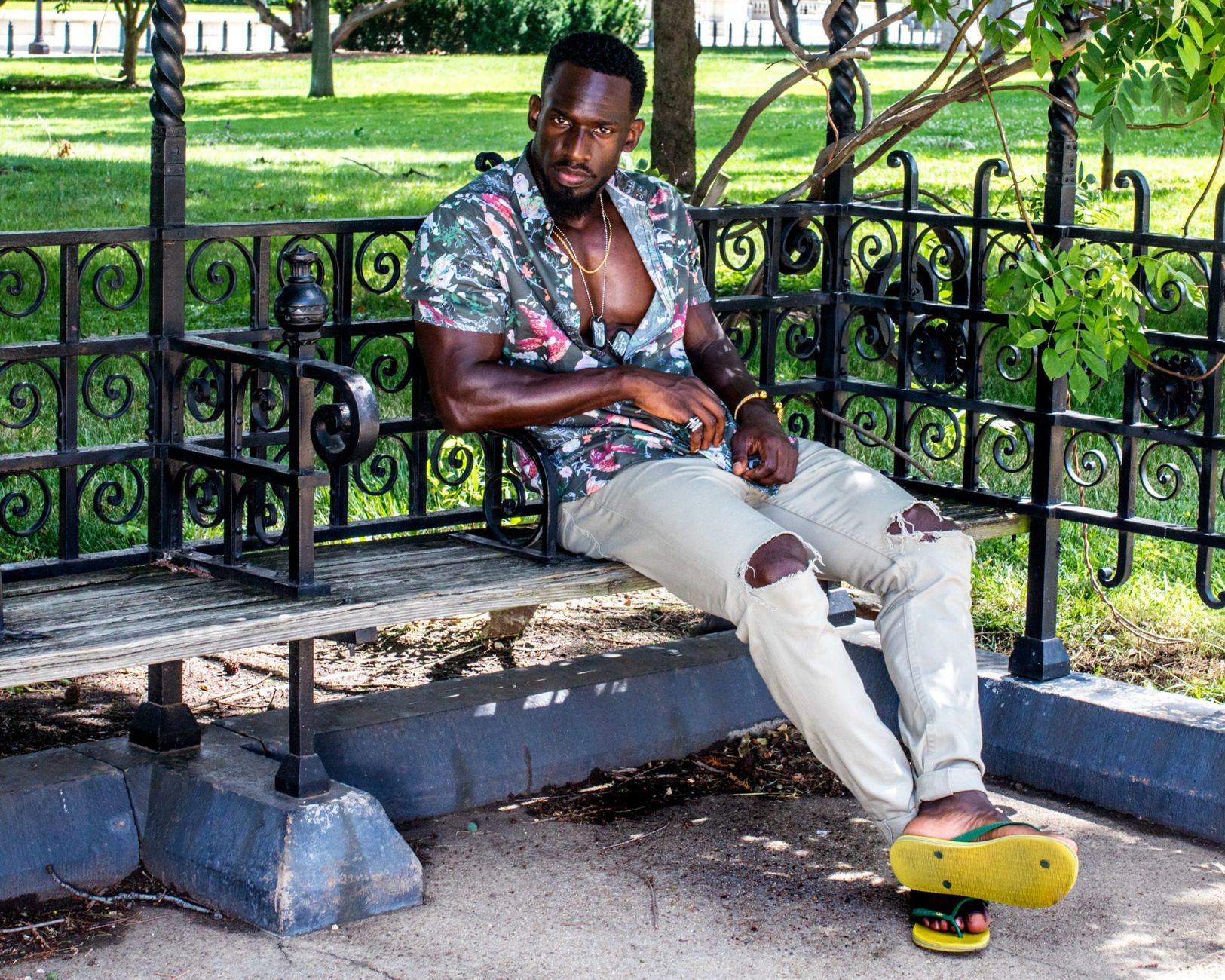
Two grey areas deserve a direct answer. Denim: acceptable in roughly the same offices that allow leather sneakers, and only in dark, unwashed, undamaged form. Sleeveless: acceptable for women in shell tops with a wide shoulder, not in spaghetti straps.
Business casual vs business professional vs business smart
The difference is the suit. Business professional requires a matched suit; business casual does not; smart casual barely resembles either.
| Element | Business professional | Business casual | Business smart / smart casual | Casual |
|---|---|---|---|---|
| Men’s core | Matched suit, tie, dress shirt | Chinos or trousers, collared shirt | Blazer with contrast trousers, no tie | Jeans and a tee |
| Women’s core | Suit, tailored dress with jacket | Blouse with trousers or skirt | Elevated separates, statement knit | Jeans, casual dress |
| Tie required | Yes | No | Optional | No |
| Shoes | Polished oxfords, closed pumps | Loafers, flats, low heels | Loafers, clean leather sneakers | Sneakers, sandals |
| Denim | Never | Dark only, if allowed | Yes, undamaged | Yes |
| Typical settings | Law, banking, interviews at senior level | Most offices, client-facing roles | Creative studios, after-work events | Remote work, warehouses, casual Friday |
| Share of U.S. workers | 3% | 41% | Counted within casual categories | 31% |
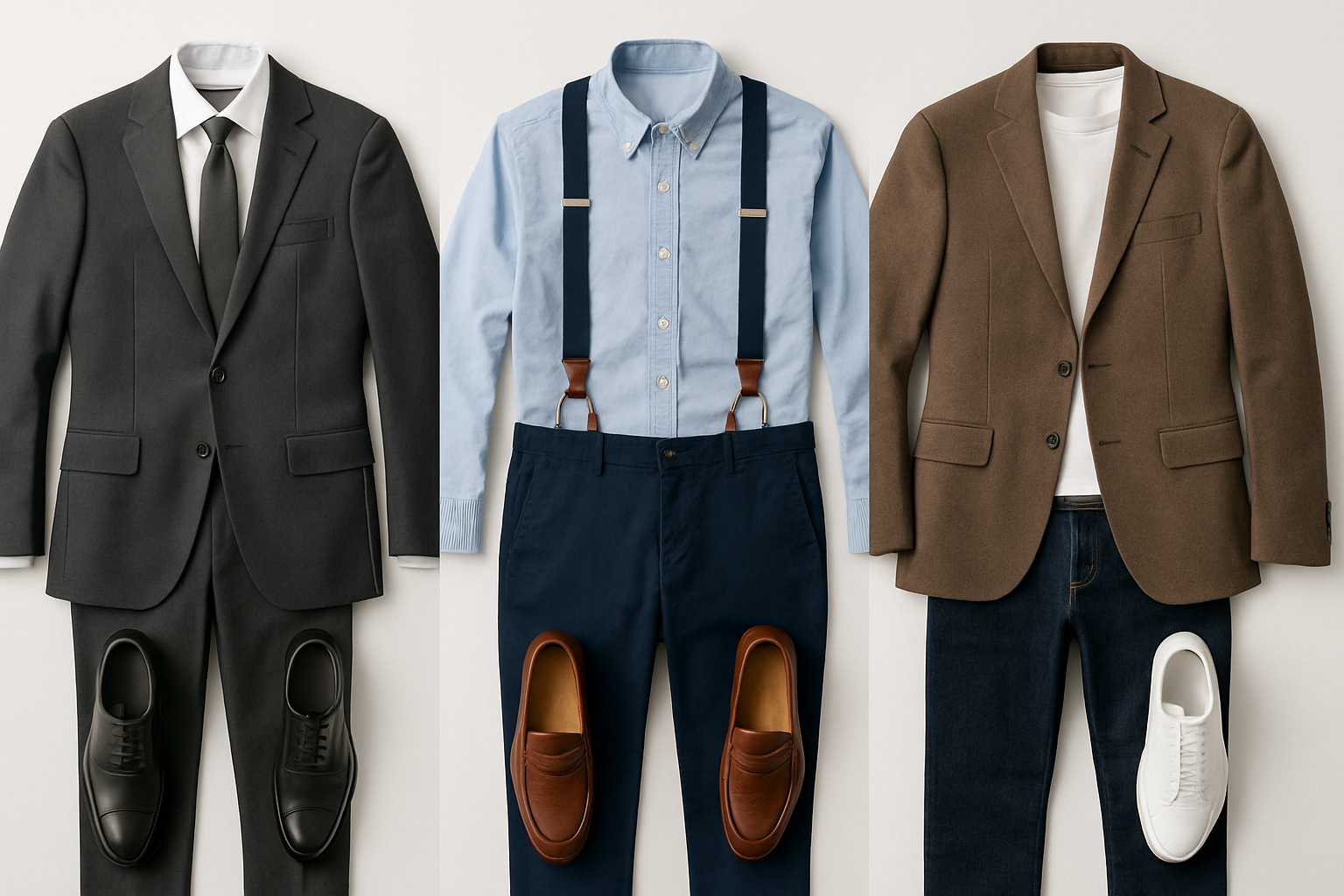
Where the business casual dress code checklist ends and business smart begins is mostly a question of vocabulary. Business smart is the phrase used most in the UK and increasingly in job listings for female candidates. Read it as business casual with a sharper third piece: same trousers, better blazer, no denim.
Situational examples: interview, office, client meeting
Dress one notch above the room you are entering. That single rule solves most situational questions.
Job interview at a business casual company
Wear what the office wears, plus a jacket. Men: navy blazer, light blue shirt, grey trousers, brown derbies. Women: blazer, shell top, tailored trousers or a knee-length skirt, low heels. Add a tie only if the industry is finance, law, or government.

Normal office day
Drop the jacket, keep the collar. Oxford shirt with chinos and loafers for men; blouse with ankle pants and flats for women. This is where suspenders, a knit tie, or a patterned sock earns its place without anyone raising an eyebrow.
Client meeting or presentation
Add structure and cut the pattern volume. A blazer, solid shirt, and polished leather shoes photograph and video-call better than texture-heavy layers. Keep accessories to two visible pieces so attention stays on your slides.

Business casual events after work
Evening business casual allows more color, a waistcoat, and richer fabrics like flannel or velvet trim. Suspenders in a textured weave read intentional here rather than costume. Choosing a strap width and back style that suits your frame matters more than the pattern; we break that down in our notes on choosing suspenders for your body shape.
Ready to build the accessory half of your work wardrobe? Browse the full range of suspender styles and pick a pair in navy, charcoal, or brown to match the shoes you already wear to the office. Solid Y-backs go with everything on this checklist, and they last for years if you care for them properly.
Key takeaways
- Business casual keeps collars, tailoring, and leather shoes; it drops the matched suit and the tie.
- 41% of U.S. workers dress business casual, versus 3% in business professional, per Gallup’s 2023 poll.
- Men’s baseline: collared shirt, chinos or wool trousers, leather shoes, one layer, belt or suspenders never both.
- Women’s baseline: blouse or sheath dress, tailored bottoms at or near the knee, closed or low-heeled shoes, one statement accessory.
- Never acceptable anywhere: gym clothes, beachwear, clubwear, and damaged or stained garments.
- For interviews and client meetings, add a blazer and dress one notch above the room.
- Policies vary by employer culture, so read your handbook before you test the grey areas of any business casual dress code checklist.
People also ask
What is the 3-3-3 rule for clothes?
The 3-3-3 rule means three tops, three bottoms, and three pairs of shoes, mixed into up to 27 outfits. It is a capsule wardrobe method borrowed from minimalist dressing, and it maps neatly onto office clothing: three shirts, three pairs of trousers, and three shoes cover a full work week with almost no repeats. It is sometimes confused with Project 333, a separate challenge built around 33 items worn for three months.
What makes a woman look wealthy at work?
Fit, fabric, and restraint, in that order. Tailored shoulders and hems that hit the right point cost less than most people expect from a local alterations shop, and they do more for perceived quality than a designer label. Natural fibers such as wool, silk, and cotton hold their shape through a workday; heavy polyester does not. Limit the palette to two or three colors and keep jewelry to one or two visible pieces.
Are jeans business casual?
Sometimes, and only in dark, undamaged, unfaded form. Offices that permit dark denim usually also permit clean leather sneakers, so treat those two as a matched pair of signals. If nobody at your level wears jeans on a Tuesday, they are not business casual at your company.
Can you wear suspenders with business casual?
Yes. Suspenders are business casual when worn with a tucked shirt, trousers at the natural waist, and no belt. Stick to solid colors or fine stripes in a standard 1.25 to 1.5 inch width, and keep novelty prints for weekends.
What is the difference between business smart and business casual for women?
Business smart is a sharper version of the same wardrobe. Business casual allows a cardigan and dark denim in relaxed offices; business smart expects a structured blazer, no denim, and a closed shoe. The tops, trousers, and skirts overlap almost completely.
Do you need a blazer for business casual?
Not daily, but you should own one. A blazer is what converts an everyday business casual outfit into interview or client-meeting attire, which is why every situational entry in this business casual dress code checklist adds a jacket rather than changing the whole outfit.


